-
Average rating
35
Games
0
Votes cast
Heartbeat
Shipped Titles
Games (35)
SuperLite 1500 series: The Tetris
Bullet-Proof Software2000
The original version of the latest puzzle game classic! "Tetris" is proud to number more than 50 million sales worldwide, is a popular puzzle game. This work "The Tetris" So scores continue to compete off the block "1PLAYER" mode, you can play with man against man "2PLAYER" We offer a mode. "1PLAYER" mode is a type of game scores compete. Eliminate one level up every 10 columns, change the background image is available 140 sheets at a time. The faster the blocks fall in the level rises will slow once every five levels, maintains the integrity of the tension and sense of relief on continuing the game. The difficulty levels from 0 to 30 can be selected at intervals of 5 levels. When you reach a level higher than 35 games go, the more you can choose from one level in the next play. "2PLAYER" mode is a type of game play against each other to do two users. Depending on the column player disappeared, garbage is fed to the other blocks. Saseta side wins piled up above the opponent's block.
Tetris 4D
Bullet-Proof Software1998
A Tetris game for the Dreamcast.
Tetris S
Bullet-Proof Software1996
A Japan-only release of Tetris for the Saturn.
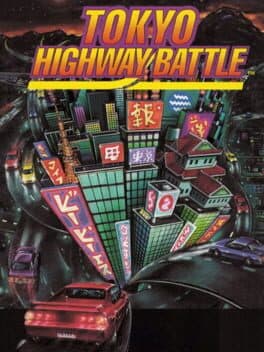
Tokyo Highway Battle
Genki1996
Players navigate through three Tokyo highway circuits driving one of 72 high-performance sports cars. While driving, players earn valuable points which are used to purchase upgrade parts for their vehicle. To ensure the most realistic gameplay, developers Bullet-Proof Software, enlisted the guidance of racing champion, Keiichi Tsuchiya and automotive specialist, Masaaki Bando Under their supervision, Bullet-Proof painstakingly recreated the physics and handling of each race car. The Saturn release, only released in Japan, included many more videos and starred the Drift King himself through these cutscenes.
Tetris X
Bullet-Proof Software1996
Tetris X is a tetris game with 2 game modes: Battle & Classic mode. In the battle mode you can play up against 3 human players or against the computer.
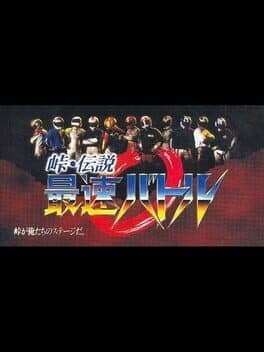
Touge Densetsu: Saisoku Battle
Lenar1996
Touge Densetsu: Saisoku Battle is a Racing game, developed by Lenar and published by Bullet Proof Software, which was released in Japan in 1996.
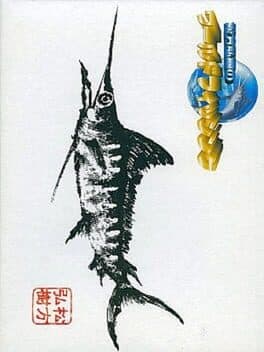
Matsukata Hiroki no World Fishing
Tose CO., LTD1996
Matsukata Hiroki no World Fishing is a Sports game, published by BPS and Media Quest, which was released in Japan in 1996.01.19 and 1996.02.02 .
Taikyoku Igo: Idaten
1995
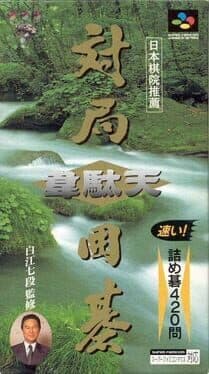
Taikyoku Igo: Idaten ("Playing Go: Idaten") is a Go game for the Super Famicom and the follow up to Bullet-Proof Software's Taikyoku Igo: Goliath from 1993. The game has numerous customization options for the size of the board and the difficulty of the opponent. As well as standard Go games, the player can also attempt instance puzzles where they have a limited amount of time and moves to beat the opponent with a pre-determined board layout.
Gekitou Burning Pro Wrestling
Ukiyotei1995
Gekitou Burning Pro Wrestling featured a staggering, encyclopedic 129 Wrestler roster, plenty of modes to choose from and a insanely customizable array of options to set up match types that was unseen in any other Wrestling game at the time. The wrestlers featured in Gekitou Burning Pro Wrestling span across a multitude of different Wrestling promotions With a diverse cast of recognizable faces all disguised under different aliases including Wrestling Legends, Mixed Martial Artists, Shoot Fighters, Puroresu Megastars, and even Mexican Luchadors.
V-Tetris
Locomotive Corporation1995
V-Tetris is a Miscellaneous game, developed by Locomotive Corporation and published by Bullet Proof Software, which was released in Japan in 1995.
Chou-Mahou Tairiku Wozz
Red Company1995
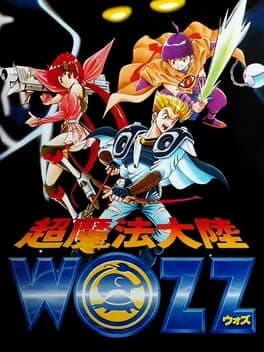
A traditional Japanese-style RPG similar to Breath of Fire: turn-based battles are viewed from an isometric perspective. You control all three characters as a party, but in the beginning of the game you choose one of them as the main character, and therefore will see the game from his/her perspective. In case the characters split up, you'll be able to control only the one you chose.
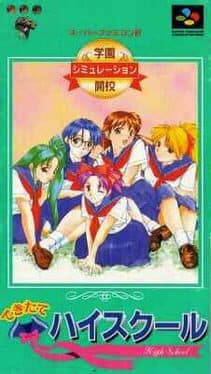
Dekitate High School
C-Lab1995
Dekitate High School is a Super Famicom video game that was released to an exclusively Japanese market in 1995 and was considered to be the first "high school simulation" video game to be released for the Super Famicom. Famed Japanese illustrator Nishiki Yoshimune would draw the cover art for the game while the actual character design was done by the in-house staff at C-Lab. The game involves going through a day of high school in Japan as a teacher while managing a star pupil to good grades and popularity. Players can even build their own high schools for the purpose of gameplay, making this game similar to SimCity. A massive amount of yen is given at the start; so players can assign all the classes and even create yards of grass for students to loiter in between classes. Socializing with an assigned student will be more than just teaching her kanji and arithmetic lessons. Menus and multiple choices are used to get through the game with a first-person perspective.
Super Bombliss
Tose1995
Super Bombliss is a Puzzle game, developed by TOSE and published by Bullet Proof Software, which was released in Japan in 1995.
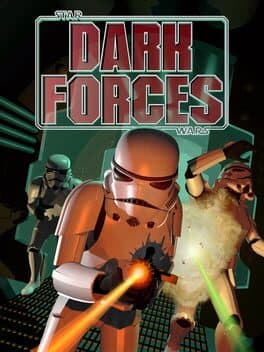
Star Wars: Dark Forces
LucasArts1995
The Empire stretches its evil clutches across the galaxy, consuming planets with devastating results. Through many struggles, the Rebel Alliance has learned of a new Imperial battle station, the Death Star, with enough power to destroy an entire planet. The evil Empire is secretly building a massive army to complete their arsenal of domination and render their reign of terror unstoppable. Kyle Katarn, a formal Imperial Stormtrooper must join the Rebel Alliance's covert operations division, and re-take the Empire from the inside, one battle at a time. Unlike many other Doom-based games, Star Wars: Dark Forces attempted a realistic approach: the missions followed a specific storyline, sometimes cut up by scenes to progress the narrative. Each mission had its own briefing and objective. The levels were designed to represent actual bases, mines, facilities, and other known places from the Star Wars universe, like Star Destroyer interiors, Jabba's ship, Coruscant, etc.
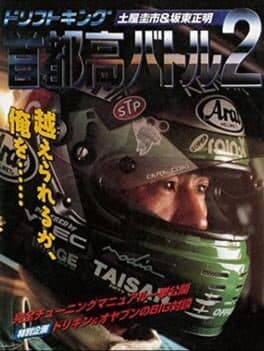
Drift King Shuto-kou Battle 2: Tsuchiya Keiichi & Bandou Masaaki
Genki1995
Drift King Shuto-kou Battle 2 is a behind-the-car driving game exclusive to the Super Famicom. It is named after and endorsed by Keiichi "Drift King" Tsuchiya, and the title refers to the Shuto Expressway near Tokyo upon which most of the races take place. Players select a car and customize it before taking it to the track to race against other street racing enthusiasts. The game maintains a split-screen regardless of whether or not a second player is involved; on single-player, the top screen's camera stays on the starting line.
Super Tetris 3
Tose1994
Super Tetris 3 is yet another version of the famous soviet puzzle game. However, despite what the title may suggest, contained within are actually four different versions of Tetris: Tetris Classic, Familiss, Sparkliss, and Magicaliss. Tetris Classic, of course, is the basic version of the game, which comes with an endless mode and a 25-line "standard" mode. Familiss, as the name might suggest, is a family mode for up to four players simultaneously. Sparkliss, meanwhile, is very similar to Bombliss from Super Tetris 2, only with a medieval fantasy theme and different explosion patterns. Sparkliss includes both a stage mode and a puzzle mode. The most unique mode is Magicaliss, which has never shown up on any other version of Tetris. In Magicaliss, pieces come in three basic colors, and by rotating the piece, the player can choose between them. Creating a line entirely out of one color will clear all blocks on the screen of that color. There are also grey pieces, which can only be cleared by creating a line made entirely from one color, which will cause all grey blocks on screen to become that color. There are also rare rainbow pieces which will act as any color. Besides these additions, the game itself is basic Tetris. Tetris Classic, Sparkliss, and Magicaliss can also be played in a two-player battle mode, besides the four-player Familiss mode.
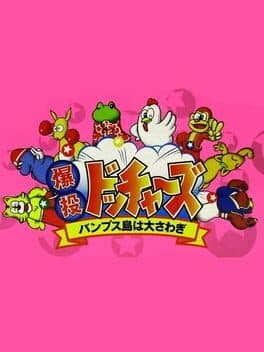
Bakutou Dochers: Bumps-jima ha Oosawagi
Genki1994
Bakutou Dochers is a Japan-only action game for up to four players. It superficially resembles Hudson's Bomberman series, with its top-down grid stages and chaotic gameplay, but rather than leaving bombs and waiting for them to explode, the player can shoot energy at blocks and each other. The goal is to sneak up behind the opponent and shoot them before they can reciprocate. Various power-ups may appear after destructible blocks are removed, which can give the player an edge or, in the case of the ? icon, a possible random negative effect like reversed controls. There are also wandering monsters that can cause damage to anyone they come in contact with. Every combatant has a health bar which depletes at a rate dependent on the attacks they are getting hit by. The single-player mode involves fighting through various worlds and removing all enemy combatants from the field to progress.

Michael Andretti's Indy Car Challenge
1994
Indy Car Challenge lets the player get behind the car of some of the fastest race cars on Earth. The player gets to race on 16 different Indy tracks across the U.S., with some tracks also in Canada and Australia. The view of the game is set behind the back of the car and there are three different camera angles during the replay of races along with a "manual" camera that lets the player rotate around the car at 360 degrees.
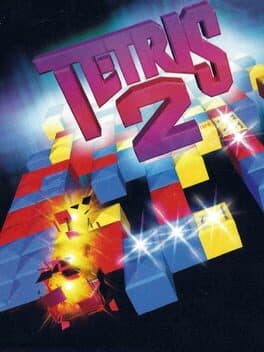
Tetris 2
Nintendo R&D11994
SNES release of "Tetris 2". The mesmerizing fun of Tetris returns - and the challenge escalates to new heights! Test your dexterity, tease your brain and rack up points with Tetris 2. Your split-second decisions lead you to a new dimension in puzzle-solving action! Play alone or challenge a friend in simultaneous split-screen action. A tougher Tetris with more shapes, more components, 30 levels - and unlimited solutions! If you loved the international game sensation Tetris, you'll be wild for the newest dimension in puzzle fun: Tetris 2!
Drift King Shuto-kou Battle '94: Tsuchiya Keiichi & Bandou Masaaki
Genki1994
Drift King Shuto-kou Battle '94: Tsuchiya Keiichi & Bandou Masaaki, is a Japan-only racing game for the Super Famicom. The player controls a stock car across various circuits (highway, race track, driving school or tōge) in either the scenario or the practice mode of the game. It was published by Bullet-Proof Software (BPS). This game is the first of the long-running series of Shutokō Battle games. These games were eventually known under various names abroad including Tokyo Xtreme Racer in North America and Tokyo Highway Challenge in Europe. "Drift King" is the trademark nickname of Japanese pro racing and former street racing driver Keiichi Tsuchiya.
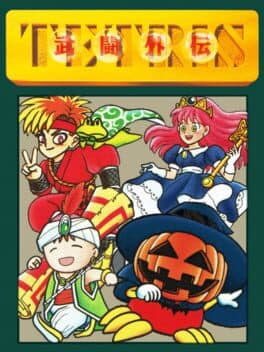
Tetris Battle Gaiden
Bullet-Proof Software1994
Tetris Battle Gaiden is a competitive puzzle-battle game, similar to games such as Puzzle Fighter or Puyo Puyo. One can play against a friend or the Computer in a story mode. There is also an included Rensa mode, which ensures a more hyperactive game due to increased gravity. The player can choose from a list of characters in the story mode, including a Dragon or a pumpkin named Halloween.
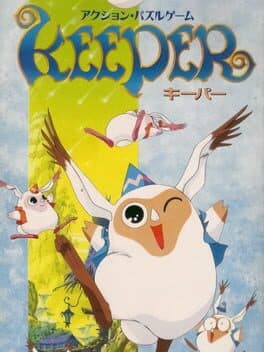
Keeper
Fupac1993
Keeper is an action/puzzle game developed by Fupac and published by Bullet-Proof Software, and released only in Japan for the Super Famicom.
Taikyoku Igo: Goliath
1993
Taikyoku Igo: Goliath is a Miscellaneous game, published by Bullet Proof Software, which was released in Japan in 1993.
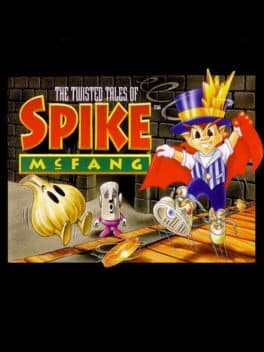
The Twisted Tales of Spike McFang
Red Company1993
The Twisted Tales of Spike McFang is an action-rpg starring the titular hero, a young vampire prince who must rescue his parents and save the inhabitants of the Vladamasco Islands from the evil Von Hesler. But is it really his handiwork, or is there someone else controlling him? Unravel the mystery while traveling to various locales, fighting Von Hesler's henchmen and picking up (CPU-controlled) companions along the way. Spike McFang has three main methods of attack: by striking out with his cape, throwing his hat like a boomerang, or using a magic card. Cards can also heal his health or give his companions extra strength. Spike can also devour the still-beating hearts of his vanquished foes (or the dropped tomatoes of his vanquished foes if you're playing the sanitized North American version) to regain health. There are a total of four different hats that Spike can purchase as upgrades in his battle against animated garlic bulbs, bomb-throwing cats, head-spinning plants and a plethora of other dangerous enemies.
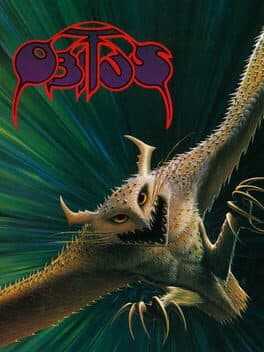
Obitus
Scenario Developments1991
Obitus is a role-playing game with action elements. It utilizes a first-person view for exploration, similarly to Dungeon Master and Eye of the Beholder. One of the more remarkable features is in the first-person mode: rather than having just 4 directs to face and flicking between them, there are 8 directions and the view scrolls smoothly as you turn. This smooth scrolling continues when you move forward, giving the game more of a 3D feel. The action elements consist of horizontal scrolling areas where you fight enemies with your bow while avoiding their attacks. Later you encounter a similar type of gameplay that involves exploring castles and adds 4 directional movement.
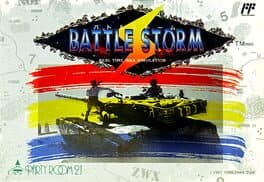
Battle Storm
Bullet-Proof Software1991
The game allows players to do combat strategies with tanks, airplanes, military bases, and non-nuclear missiles. These advanced weapons allow players to stage a fictional World War III and to simulate modern warfare. Players can assume the persona of various clichéd Hollywood action film stars like Rambo, Chuck Norris, Eddie Murphy, Bruce Lee, and Arnold Schwarzenegger. Stages include a jungle, forest, the swamp, and urban terrain. The player must choose a tank with his or her directional pad. Once there, the player must decide either to move a unit or destroy the enemy on sight. Destroyed units can be rebuilt for money and the first person to run out of cash loses the war. Both players can enjoying the fun and games with more $250 million of virtual game currency to spend on cool military toys to fire at each other.
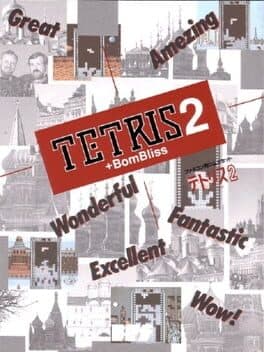
Tetris 2 + BomBliss
Bullet-Proof Software1991
A regular tetris game with simultaneous 2-player action and a more puzzle oriented Tetris variant, Bombliss, for the Famicom.
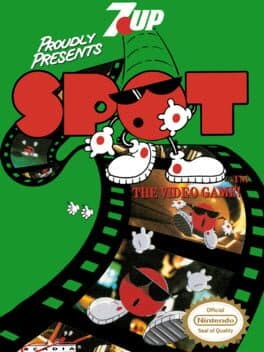
Spot: The Video Game
Virgin Mastertronic1990
A puzzle game loosely featuring licensing from the 7Up soft drink. The gameplay involves up to 4 players, which can be either human or computer, each taking on spots of a particular colour. Starting from opposite corners, they take it in turns to move, either by 'reproducing' one of their spots to form another one in an adjacent square, or by making a jump, losing the square you did have but taking one two spaces away.
Hatris
Alexey Pajitnov1990
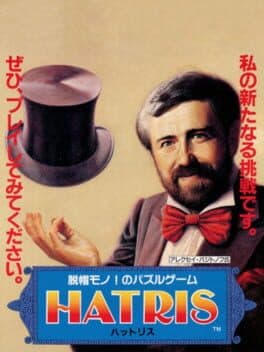
Hatris is a puzzle video game developed by Alexey Pajitnov, creator of famous video game Tetris. In Hatris, the falling blocks of Tetris are replaced by falling hats which are top hats, cowboy hats, baseball caps, derbys, party hats and crowns. The setting is a hat factory, where hats are dropped down from a conveyor belt two at a time and must be stacked on one of six mannequin heads. Once five hats of the same kind have been stacked on top of each other, they fall down onto another conveyor belt below and are shipped out of the factory, rewarding the player with a cash bonus (the game keeps track of score as money, not simply points). Once you ship out enough hats out of the shop, you go up a level to the next shop. The higher shop number you get to, the more types of hats start appearing to make it more difficult for you to accomplish your task. The game ends when one of your stacks of hats reaches the top of the screen.
Welltris
Bullet-Proof Software1989
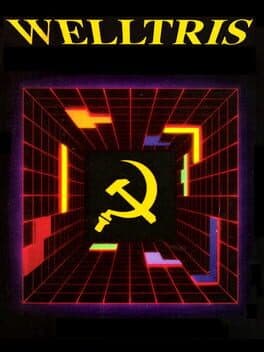
Welltris is a puzzle video game, developed by Doka and licensed to Bullet-Proof Software. Adaptations were made by Sphere, Inc for Spectrum Holobyte, and by Infogrames. It was originally released for DOS and Macintosh in 1989. It was subsequently ported to the Amiga and Atari ST in 1990 and the ZX Spectrum and Commodore 64 in 1991.
Deflektor
Vortex Software1987
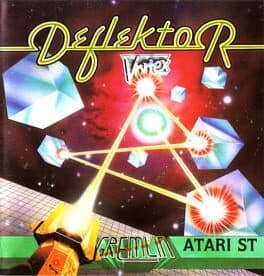
DEFLEKTOR es una experiencia en la lógica del láser. No hay ni héroes ni enemigos, simplemente un magnífico reto de tu habilidad. El objeto de DEFLEKTOR es de completar el circuito óptico. El láser produce un rayo de alta intensidad que debe llegar al receptor antes de que se haya reducido totalmente la energía. Esto se consigue reflejando, refractando y polarizando el rayo por la pantalla; los obstáculos en el camino del rayo pueden reflejar, absorber, o en el caso de la fibra óptica, transportar el rayo. Tienes el poder de controlar el rayo, pero la ruta hasta el receptor está cerrada hasta que hayas utilizado el láser para destruir todas las células. Debes tener cuidado de no sobrecargar el láser tocando minas o reflejando el rayo de nuevo sobre bu propio trazado. Pero no sólo eso: NO ESTAS SOLO... ten cuidado con los Gremlins! CONTROLANDO EL RAYO El láser puede ser dirigido ajustando el ángulo de ios espejos. Los espejos que giran solos pueden parar, o girar más rápido, según la dirección en la que intentes moverlos. Otros factores no pueden ser controlados direc-tamente, pero se pueden usar para afectar al rayo de alguna manera, bien reflej�ndolo, bien rediri-giéndolo. En el caso de la fibra óptica, un rayo que da contra un bloque reaparecerá en otro bloque en otara parte de la pantalla. Situación de sobrecarga Puedes sobrecargar tu láser de tres maneras: 1. Reflejo total. Si el rayo se refleja directamen-te sobre su propio recorrido y vuelve al láser lo sobrecalentará. 2. Demasiada distancia. Si el rayo debe reco-rer una distancia demasiado larga se debilitará y hará fallar el laser. 3. Alerta de minas. El rayo de láser ha colisio-nado con el campo de minas. Se crea un exceso de corriente que llevará rápidamente a un sobrecalentamiento. En todos estos casos debes redirigir de inme-diato el rayo y esperar que vuelva a cero el indicador de sobrecarga.
Igo: Kyuu Roban Taikyoku
Bullet-Proof Software1987
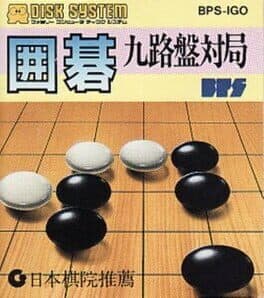
A Japan-only Go game developed and published by Bullet-Proof Software for the Famicom Disk System. Igo: Kyuu Roban Taikyoku ("Go: 9 Row Grid Boardgame") is a Go video game that was originally released for the Famicom Disk System on August 11, 1987 in Japan. It was the first Famicom game developed by Bullet-Proof Software: a development studio operating out of Hawaii that would later be responsible for Nintendo's version of Tetris, among other games. This version of Go is better suited for beginners, as it contains simpler 9x9 grids rather than the regulation 19x19. Igo: Kyuu Roban Taikyoku has a credit for Edge Computing on its title screen; it is assumed some of the game's coding was taken from Edge's C64 game Micro Go.
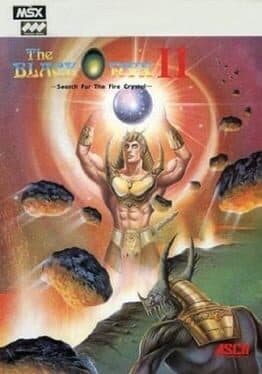
The Black Onyx II: Search for the Fire Crystal
Bullet-Proof Software1986
After having recovered the legendary Black Onyx in your previous adventure, your party of heroes took the portal in Utsuro town to a new world, where they begin the search for the powerful Fire Crystal. In order to find this mysterious artifact, they have to venture into a system of dungeons and to defeat the monsters that live in them. The sequel to Black Onyx is very similar to its predecessor, graphically as well as gameplay-wise. You build a party of up to five adventurers and take them to fight in first-person 3D dungeons. You encounter random enemies as well as fellow adventurers, whom you can recruit to your party if it is not full.
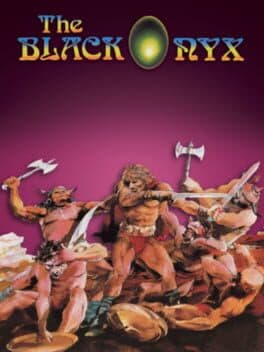
The Black Onyx
Bullet-Proof Software1984
The Black Onyx is a role-playing game developed by Bullet Proof Software. It was released, among other consoles and computers, for the SG-1000 in 1987. It was the last SG-1000 game to be released in card form, and the last to be published by Sega, but it is currently unknown as to whether it was the last SG-1000 game. MSX and PC-8801 versions had been released in 1983 and 1984, respectively, meaning this version is unusually late. The game was followed by The Black Onyx II: Search For The Fire Crystal, which saw its original MSX release in 1984.
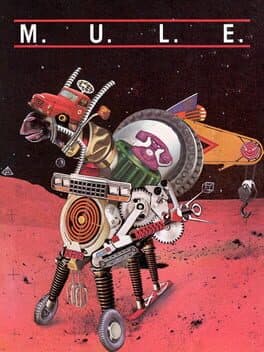
M.U.L.E.
Ozark Softscape1983
MULE is a first-person, open-world, parkour delivery game - a mash-up of Mirror's Edge, Crazy Taxi and Burnout Paradise - where you play as a courier with prosthetic legs making deliveries in a cyberpunk city.