-
Average rating
39
Games
0
Votes cast
Heartbeat
Shipped Titles
Games (39)
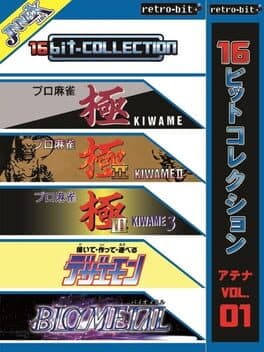
16bit-Collection Athena Vol. 01
Athena Co., Ltd.2018
16bit-Collection Athena Vol.1 is a 16-bit cartridge which built 5 titles in one cassette of old masterpiece game. Includes: - Pro Mahjong Kiwame - Pro Mahjong Kiwame 2 - Pro Mahjong Kiwame 3 - Dezaemon SFC - Biometal
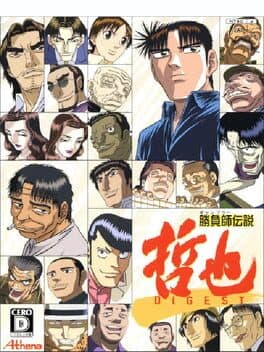
Gambler Densetsu Tetsuya Digest
Athena2004
Gambler Densetsu Tetsuya Digest is a mahjong game from Athena. This new installment in the popular Japanese Mahjong series "Gambler Densetsu" features four different scenarios. Players have conversations with the roster of 26 characters while trying to beat them with an inventory system of cheating techniques. In addition to its large cast, the game includes three gameplay modes, a scenario battle mode, a free battle mode, and a survival battle mode. The game's official title is Shoubushi Densetsu: Tetsuya DIGEST, but with the furigana subtitle "Gambler" for Shoubushi.
Higanbana
Athena Co., Ltd.2002
Higanbana is an Adventure game, published by Athena, which was released in Japan in 2002.
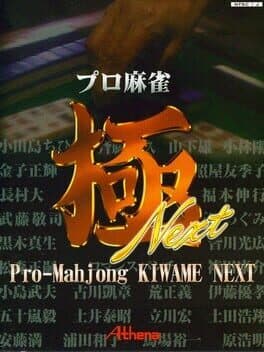
Pro-Mahjong Kiwame Next
Athena Co., Ltd.2000
Sharpen your mind and challenge the masters in Pro-Mahjong Kiwame Next for the JP PlayStation 2. This title delivers a comprehensive and authentic simulation of the classic tile-based strategy game. Whether you're a seasoned veteran or new to the world of Mahjong, this game provides a perfect platform to test your skills. Compete against a variety of AI opponents with distinct playstyles, learn complex strategies, and enjoy the deep, tactical gameplay that has captivated players for generations. Prepare for the ultimate test of skill, strategy, and a little bit of luck.
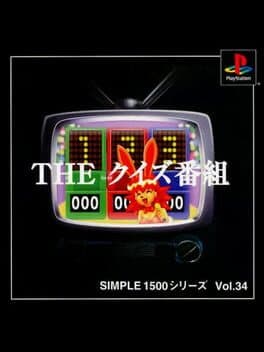
Simple 1500 Series Vol. 34: The Quiz Bangumi
Athena2000
Simple 1500 Series vol. 34: The Quiz Bangumi is a quiz game that features 4 different themes and 12 different characters for the player to choose. The game features more than 6000 different questions and can be player with up to 4 human players at the same time using the multitap device.
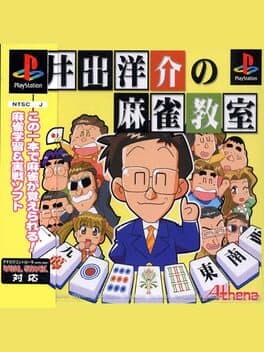
Ide Yosuke no Mahjong Kyoushitsu
Athena1999
Ide Yōsuke no Mahjong Kyōshitsu is a Mahjong learning and practice game featuring Mahjong professional Ide Yōsuke. The game has a number of lessons shown with a manga style drawn Ide Yōsuke explaining the rules of the Chinese classic board game of Mahjong, and allows the player to try what they have learn on Mahjong boards.
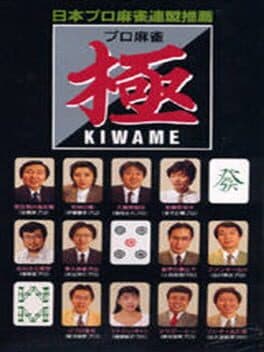
Pro Mahjong Kiwame for WonderSwan
Athena1999
Pro Mahjong Kiwame for WonderSwan is a Miscellaneous game, developed and published by Athena, which was released in Japan in 1999.
Pro Mahjong Kiwame Tengensenhen
Athena1999
Pro Mahjong Kiwame is a four player Riichi mahjong game, unlike most one-on-one Mahjong games released at the time and the modern casual games. Players take and discard tiles until they've completed hands by forming groups and pairs.
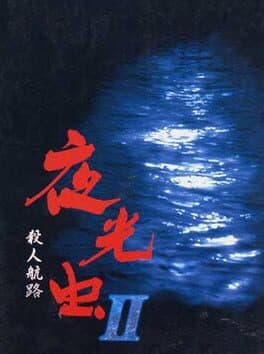
Yakouchuu II: Satsujin Kouro
Athena1999
Yakouchuu II: Satsujin Kouro is an adventure game for the Nintendo 64 released only in Japan in 1999. Sequel to the Super Famicom game Yakouchuu, released in 1995. Yakouchuu GB was also released in 1999 for the Game Boy Color.
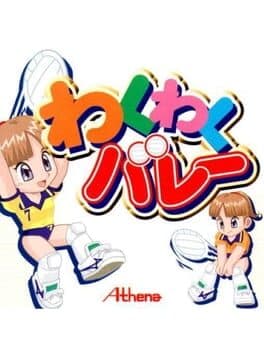
Waku-waku Volley
ART1998
Waku Waku Volley is a volleyball game that features different game modes: World Mode: Classic mode with teams of 6 players in which the game features 8 different countries to choose from: Italy, Netherlands, Russia, Cuba, Brazil, China, Japan & USA. 2 human players can play in the same team.

Pocket Bowling
Athena1998
Pocket Bowling for the Game Boy Color brings the popular blue collar sport to the tips of your fingers (and thumbs). You can choose from six bowlers, including a secret android character who appears only after you reach a certain level. Each bowler is rated on power and technique and uses a different weight of bowling ball. Apparently, all the bowlers are ambidextrous because each one can bowl right- or left-handed.
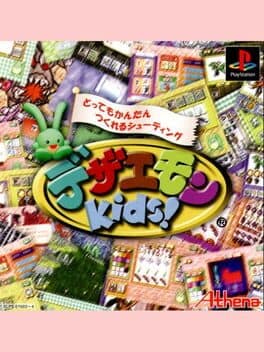
Dezaemon Kids!
Athena1998
Dezaemon Kids! is a title in the Dezaemon series that allows players to create their own shoot-'em-up games. The players can design levels and enemies by themselves or choose from a number of presets, as well as compose musical themes for the levels. The game has a simplified colorful interface which makes it targeted for younger audience. It also boasts fully-voiced tutorial, a large amount of sample data, a horizontal scroll option, and 2-player simultaneous play option. The second game disc contains 102 sample games created in Dezaemon Plus.
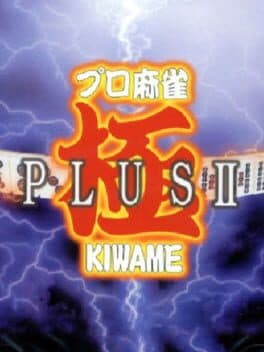
Pro Mahjong Kiwame Plus II
Athena1998
Pro Mahjong Kiwame Plus II is a mahjong game and is the second game in the series released for the Playstation One console. The game features 16 different real mahjong players as opponents and the game mode is a 4 player vs mahjong. The game got 3 game modes: Professional, Gamble & Training. Mahjong is a game for four players that originated in China. It was called, meaning sparrow in ancient China, which is still the name most commonly used in some southern Chinese dialects such as Cantonese and Minnan, as well as in Japanese. However, most Mandarin-speaking Chinese now call the game má jiàng. Mahjong involves skill, strategy, and calculation, as well as a certain degree of luck (depending on the variation played, luck can be anything from a minor to a dominant factor in winning). In Asia, mahjong is also popularly played as a gambling game. In the game, each player is dealt either thirteen or sixteen tiles in a hand, depending on the variation being played. On their turn, players draw a tile and discard one, with the goal of making four or five melds (also depending on the variation) and one pair, or "head". Winning comes "on the draw" by drawing a new or discarded tile that completes the hand. Thus, a winning hand actually contains fourteen (or seventeen) tiles.
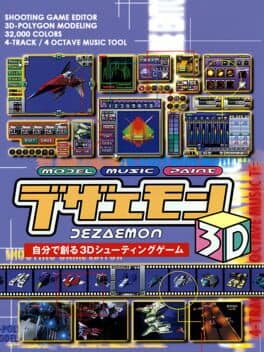
Dezaemon 3D
Athena1998
Dezaemon 3D is a video game and game creator for the Nintendo 64. It was released only in Japan in 1998. The game's editor allows players to design their own shooting game levels similar to the levels shown in Star Soldier: Vanishing Earth. The game has a large number of options, from creating the stage boss or adding a custom soundtrack for each level. It was originally developed alongside an ultimately unreleased accompanying expansion disk title for 64DD.
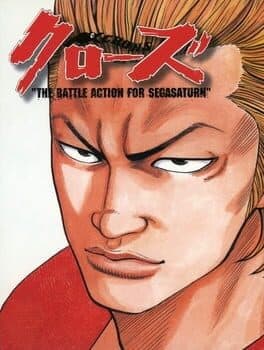
Crows: The Battle Action For Sega Saturn
Athena1997
Crows: The Battle Action is a beat-'em-up for the Sega Saturn. It is a 2D beat-'em-up based on the Crows manga series, where characters have super-deformed heads. Published by Athena Co., it appears at first glance heavily inspired by Technos ' own hot-blooded Kunio/Nekketsu beat-'em-ups, going for River City Ransom 's fighting style and super-deformed looks in particular. As it turns out, it's no coincidence; a look at the credits reveals that quite a few former Technos employees worked on it, including executive producer Teruo Ishikawa, the composers, and about half the graphics team. Most notably, the person in charge of the visuals was Kouji Ogata.
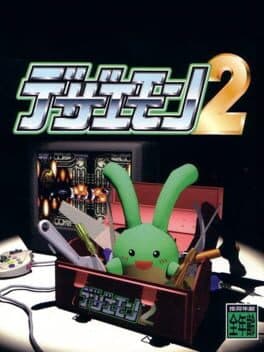
Dezaemon 2
Athena1997
Technically 4th in the series of shoot'em-up creation games by Athena (1997).
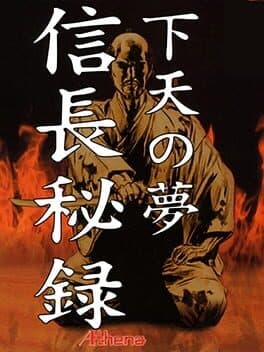
Nobunaga Hiroku: Geten no Yume
Athena1997
Nobunaga Hiroku: Geten no Yume is a text adventure game featuring Nobunaga Oda, a Japanese warlord in the Sengoku period. By reading the text on the screen and choosing the options that appear along the way, you can enjoy a variety of changes in Nobunaga's life and thus history.
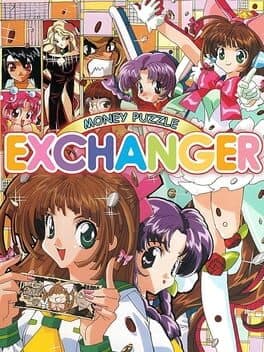
Money Puzzle Exchanger
FACE1997
A puzzle game created in 1997 by Japanese game for the Neo Geo MVS arcade system and ported to the Game Boy and the PlayStation that same year.
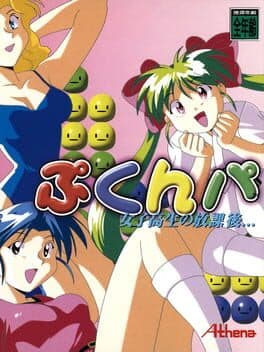
Pukunpa: Joshikousei No Houkago
Insect1996
Things fall puzzle-battle to fight schoolgirl eight 6 units closed betting honor and pride of the affiliation. Adopt a simple, straightforward rules to manipulate the "ball" has fallen from the top of the field becomes two pair, side-by-side to erase the "balls" of the same color. Let's storm the lumps "disturb" a lot of the other party caused the chain stretch and rotate the ball well two types of "lumps" small "lumps" large.
Pro Mahjong Kiwame Plus
Athena1996
Pro Mahjong Kiwame Plus is a mahjong game, and is the first game in the series released for the Sony PlayStation console. The game features 16 different real mahjong players as opponents and the game mode is a 4 player vs mahjong. The game features 3 game modes: Professional, Gamble & Training.
Ring of Sias
Athena1996
Ring of Sias is a sound novel adventure that features different endings depending of the player choices during the game.
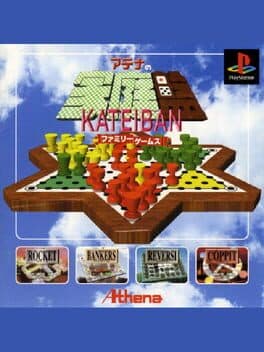
Athena no Kateiban: Family Games
Athena1996
Variety game collection was recorded board game of nostalgia. I record five sugoroku like to play using the board that mimics of Othello-like "Reversi", the luster of diamond "King Diamond", hat up game "Kopit", "rocket", the Game of Life-style of "Bankers". Can be simultaneously play up to four people maximum. Let Moriagaro in the good old game a long time ago!
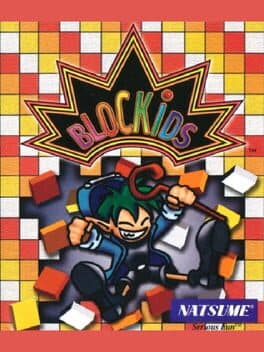
Blockids
Athena1996
Blockids for PlayStation is a 3D take on the arcade classic Breakout. Players choose one of eight animated characters and prepare to compete against an assortment of colorful opponents whose fortresses must be breached. The object is to break a series of bricks by smashing a ricocheting ball into them using a horizontal paddle. The default view is presented from an angled top-down perspective, but players can switch to a perspective right behind the paddle for a more 3D feel. New twists on the classic gameplay include the ability to bounce the ball over barriers as well as earn a special power-up by scoring a certain number of points.

Virtual Bowling
Athena1995
Virtual Bowling is a Sports game, developed and published by Athena, which was released in Japan in 1995.
Pro Mahjong Kiwame III
1995
Pro Mahjong Kiwame III is a Miscellaneous game, published by Athena, which was released in Japan in 1995. The game was later released as a downloadable game for the Satellaview.
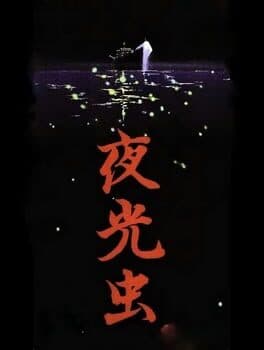
Yakouchuu
Athena1995
Yakouchuu is an adventure game. The title translates to Phosphorescent Animalcule (animalcule meaning a microscopic animal, a portmanteau of animal and molecule) and specifically to Noctiluca scintillans. It is a "sound novel" in the vein of Chunsoft's hits Otogirisou and Kamaitachi no Yoru (localized as Banshee's Last Cry): the player reads a novel-like story as the text appears on the screen with a static backdrop and background sounds to set the scene. They also occasionally make choices which can determine the route of the story. Yakouchuu concerns the ship "Diana" and its captain, who is the player-named protagonist, and crew as it sets off on an inauspicious journey. The game was ported to the Game Boy Color in 1999. The same year, it saw a sequel for the N64: Yakouchuu II: Satsujin Kouru.
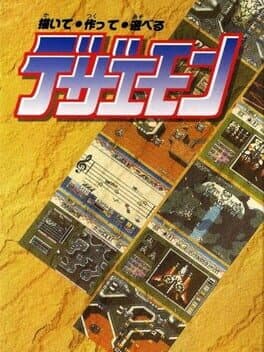
Kaite Tsukutte Asoberu: Dezaemon
Athena1994
A vertical-scrolling shoot 'em up and game creation engine, released for the Super Famicom in 1994. It is the first in Athena's series of shoot 'em up creators and features a sequel of their 1983 Arcade shoot 'em up Daioh as a sample game.
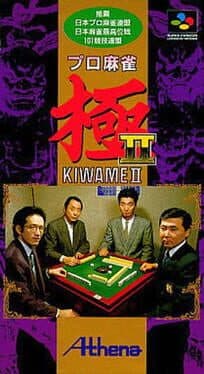
Pro Mahjong Kiwame II
1994
Pro Mahjong Kiwame II is a Miscellaneous game, published by Athena, which was released in Japan in 1994.
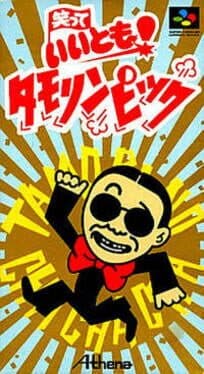
Waratte Iitomo! Tamorinpic
Athena1994
A Super Famicom four-player party mini-game collection based on the long-running Japanese variety show Waratte Iitomo! and featuring its shades-wearing host Tamori. Waratte Iitomo! Tamorinpic ("It's OK to Laugh! Tamorinpic") is a party mini-game collection based on the Japanese TV show of the same name. The show was a daily hour-long comedy variety show featuring recurring guests and various skits and interviews, hosted by the shades-wearing comedian Tamori (whose real name is Kazuyoshi Morita). It aired from 1982-2014 and made several longevity records in the process. The game allows for up to four players, but only two players ever play at once: most of the mini-games are based on completing a task within a set time or with a certain amount of precision, so all players don't need to play simultaneously. Instead, the first pair of players will play each mini-game, followed by the second pair (or two-and-one, if the three-player mode was selected). These mini-games have a comedic edge to them and vary from bowling with a snooker cue to a Simon Says game that involves clapping the correct way to certain goofy poses Tamori makes. Due to the license, the game was never released outside of Japan.
Athena No Hatena?
1993
A Japanese quiz game.
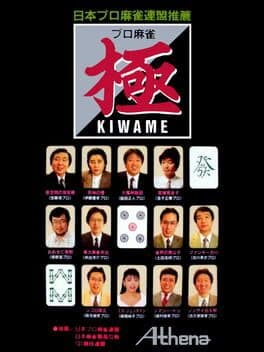
Pro Mahjong Kiwame
Athena1993
Pro Mahjong Kiwame is a Super Famicom mahjong game from Athena and the first of their Pro Mahjong Kiwame series, which would go on to have many sequels for various systems (including Pro Mahjong Kiwame GB for Game Boy). The game is touted as a serious mahjong game, requiring a certain level of skill from its players. Unlike many early video game mahjong games, the game allows for the full four participant experience rather than the truncated one-on-one set-up.

BioMetal
Athena1993
BioMetal is a side-scrolling shooter game. Their are two pairs, one for lasers and the other for missiles, of three upgrades for your weapons. The war that divided the galaxy and used all it's resources has ended. A fleet was sent on a mission to find more natural resources. They never returned. Their last transmission reveals that the enemy' created one last experiment. This experiment is a combination of the aggressive nature of animals combined with the efficiency of machines. These creatures were named BioMetal. The MF-92GX Halbard mothership has been assigned to destroy the threat before they can not be stopped. You are piloting the MF-92GX Halbard fighter that is equipped with the experimental Gel Analog Mutant weapon. The Gel is charged up on the ship and can be used to surround the ship as a protective shield or be thrown at the enemy forces.
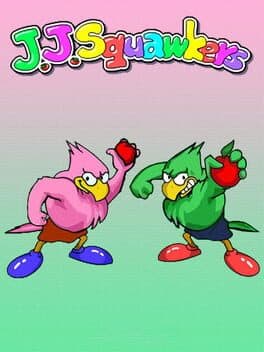
J. J. Squawkers
Athena1993
J. J. Squawkers doesn't have much of story, other than brief crawl text telling the villagers fell into spells of some sort. The short intro where two birds get attacked with the house exploding to pieces is apparently why they're going on rampage to beat up everything in their eyes, so fair enough. You play as these two angry birds named Ani Karasukun and Ototo Karasukun (altogether standing for "crow brothers" in Japanese, by the way). Along with basic ability to run and jump, they have standard projectiles attack to shoot out the enemies or destroy the objects. Your default weapon at the beginning is a handful of tomatoes. You can exchange them with better weapons by picking up the item dropped by specific enemies; available weapons include pumpkins, watermelon seeds, screws and springboards with red sneakers. Each weapon differs from others about its usefulness; for instance, screws are thrown in straight direction until they meet obstacles or the end of screen, making it easy to deal with enemies far away. On the other hand, watermelon seeds can't reach such a long distance, but they're thrown in several shots simultaneously spread in various angles, effective against the multiple enemies approaching in wide range.
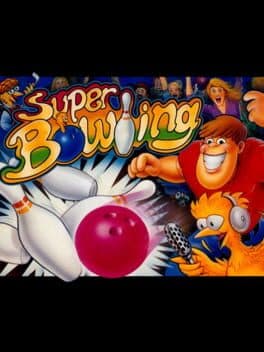
Super Bowling
KID1992
Super Bowling is a third-person bowling game. Players may bowl in several different environments, which range from ice ponds to neon-lit Chinese temples. Players can face-off against characters in their home stages, much like a fighting game. If the player wins they can then play on these stages in other play modes. Multi-player modes are also available, with a number of different variations. The game was also released as a downloadable game for the Satellaview.
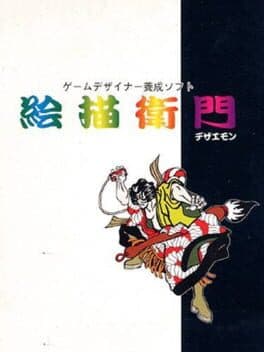
Dezaemon
Athena1991
Dezaemon is a game designing application that lets aspiring developers create their own vertical scrolling shoot-'em-up. Players have control over how their ship looks, design how their levels (up to three) will look, and also create a title screen. Players can also compose their own background music and create a list of credits to give credit to the designers of their game. There is also a sample shoot-'em-up available to play titled E.D.I.T.. It contains 3 stages of a simple vertical-scrolling space shooter where players shoot down waves of enemies and fight a boss enemy at the end of each stage. Items can also be collected which can increase their ship's speed or give their ship a defensive shield. Other items can upgrade the ships' weaponry from a vulcan cannon to either lasers or missiles.
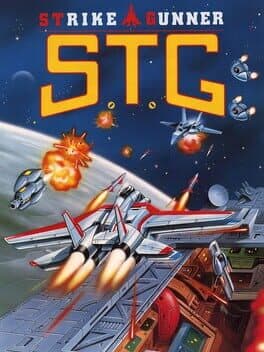
S.T.G: Strike Gunner
Athena1991
Strike Gunner S.T.G is an Action game, developed by Athena and published by Tecmo, which was released in 1991. A vertically scrolling shooter.
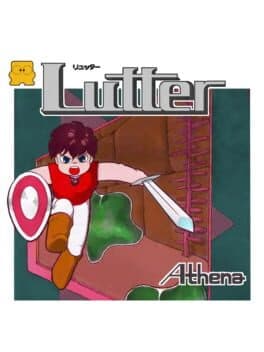
Lutter
1989
Lutter is a game comprised of single screens full of traps, obstacles, enemies and items that the eponymous hero Lutter must navigate in order to find six missing damsels and the enormous monsters that hold them hostage. The game has some element of non-linearity, as there are numerous paths that split off to explore. The chief goal is to find keys that unlock doors to new areas and eventually to large, screen-sized bosses that Lutter must defeat in shoot 'em up style boss fights. The game also features a few RPG aspects: Lutter has a health bar and can level up, which increases his health and other stats. He defeats enemies by charging into them, similarly to early action RPGs like the first Ys and Hydlide. When defeated, the game will automatically try to bribe the victorious monster with whatever funds the player has accrued: should they have enough to placate the monster (this amount often depends on the strength of the monster) Lutter reappears where he entered the screen with his health restored.
Wit's
1989
The core gameplay of Wit's is very similar to the Light Cycles portion of the 1982 arcade game Tron by Bally Midway. The objective is to move your character around a rectangular play area and create a line behind you that the other player(s) will crash into. In addition to being able to move your character in the four cardinal directions, the player also has the ability to speed up and the chance to jump once per life, allowing you to potentially escape a dead end. The game can be played either solo against the computer or against up to three other human opponents. The goal is to achieve the most points, gained by surviving, or to make it through the game's increasingly difficult 99 rounds.
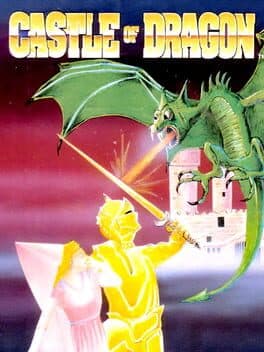
Castle of Dragon
Athena1989
It's a 2D action game focused on hack & slash with occasional platforming sections. Castle of Dragon contains eight stages and after the first three stages the game allows the player to choose from five levels at will while all the five stages must be completed to beat the game.