-
Average rating
52
Games
0
Votes cast
Heartbeat
Shipped Titles
Games (52)
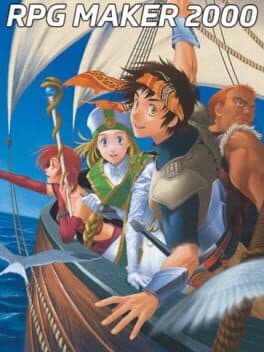
RPG Maker 2000
ASCII Corporation2000
One of the most popular entries in ASCII's RPG Maker series, RPG Maker 2000 was largely responsible for popularizing the use of RPG creation software outside of Japan.
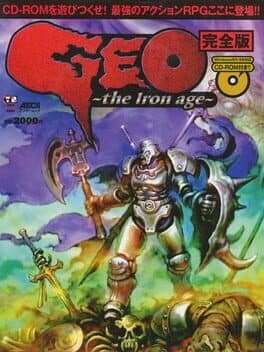
Geo: The Iron Age
1999
A Japan-exclusive top-down dungeon crawler action RPG developed by Bakuretsukoubou and published by ASCII Entertainment in 1999.

True Love Story 2
Bits Laboratory1999
Each of the three discs is available for the first, second and third semesters, and you can play through to the end of the game without having to replace the disc. Each semester, the characters, events and opening movies are different versions. It is a sequel that continues the concept of the previous work and attempts to enrich the content. The player becomes a second-year student at Aobadai High School and aims to create a girlfriend in about a month before transferring to another school. The theme is "preciousness". At the start of the play, you select three keywords, the semester, the main character's ability tendency. The ability tendency is linked with the preference of the target character, and changes the rising curve of appearance event, friendliness and admiration. Keywords can be used as your favorite topic when you have a conversation on your way home from school, and their response also changes depending on your partner's preference.

Kasei Monogatari
Japan Vistec1998
An RPG based off a series of radio dramas about a young boy named Phobos going on an adventure to find out why a group of robots attacked his town.
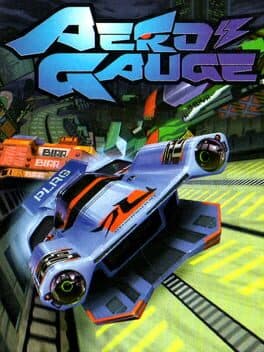
AeroGauge
Locomotive Corporation1997
In the tradition of F-Zero and Wipeout, AeroGauge is a sci-fi racer that pits you and a friend in a fast paced race to the finish through futuristic tracks and among detailed craft, acting more like planes than racers as they skim many metres above the ground. Play solo through the grand prix and compete against the AI enemy, or beat down your best time in the time trial mode. Each track features a number of twists and turns, whether it be racing upside down or vertically, with a number of obstacles in your path. There's no weapons, though, it's just you and the open road ahead.
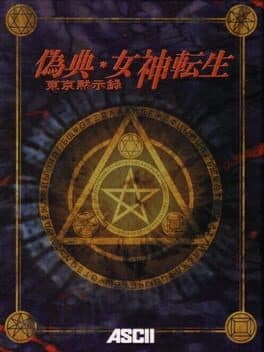
Giten Megami Tensei: Tokyo Revelation
Atlus Co., Ltd1997
A spin-off SMT title released for PC-98 in 1997 that has plot ties to both Shin Megami Tensei and the manga Shin Megami Tensei: Tokyo Revelation.
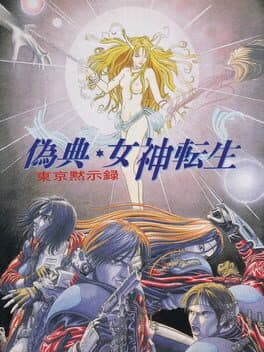
Giten Megami Tensei: Tokyo Mokushiroku
ASCII Corporation1997
The game is set in an alternate reality, in which Tokyo is invaded by hordes of demons. You play the role of a young man who lives in an underground shelter and is training to become a demon hunter with help of special programs. One day, during a training, one of the programs goes berserk, and as a result you are thrown into the world where you must fight for your life against vicious demons. Giten Megami Tensei: Tokyo Mokushiroku is a non-canonical part of Megaten universe, featuring recurrent setting and story elements of the franchise. Like in classic Shin Megami Tensei games, the largest part of the game is spent in 3D dungeons, which are viewed from first-person perspective. The battle system introduces some unusual elements: enemies are visible before the actual battle begins, and during your dungeon exploration, you will be sometimes attacked from different sides. You will have to turn around to face the enemy in real time, but the game will be paused when you select commands from menu, in a traditional turn-based fashion.
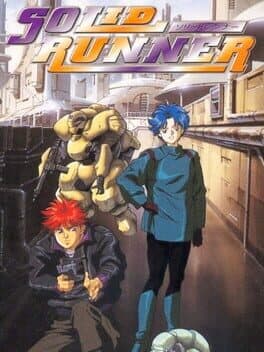
Solid Runner
Sting Entertainment1997
Solid Runner (ソリッドランナー) is a 1997 turn-based role-playing video game developed by Sting Entertainment and published by ASCII Corporation for the Super Famicom. The game was released exclusively in Japan on March 28, 1997, late in the console's life span. The game takes place in a town known as Solid City, which despite being technologically advanced, is overrun with crime. Very few people dare to challenge the control of the underground mafias and street gangs that threaten the city. While the game has a continuous plot, players are urged to complete individual missions.
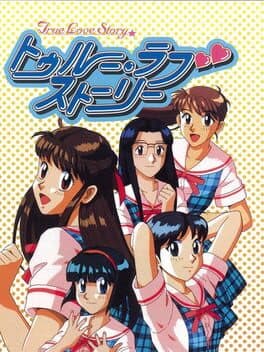
True Love Story
Bits Laboratory1996
True Love Story is a visual novel styled love simulation game where the protagonist meets many girls and has one month's time to make one of them fall in love with him. The player moved to a new town and is living with his younger sister. The story progresses in a typical visual novel style where one reads onscreen text, talks to present characters and moves from location to location in a determined order. Free movement is not done directly on a map but is rather scheduled. During school and lunch breaks the player can schedule places on school campus he wishes to visit, and after school additional scheduling of the place around the town can be selected. Depending on place one visits, the location will have different girls to talk to, or if noone and the player will soon leave the place without engaging in any dialogue with anyone.
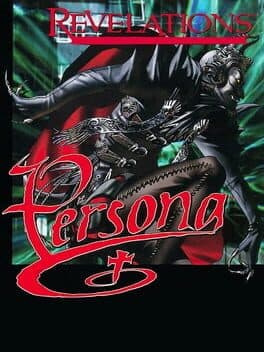
Revelations: Persona
Atlus1996
Revelations: Persona is a role-playing video game developed and published by Atlus. It is the first entry in the Persona series, itself a subseries of the Megami Tensei franchise, and the first role-playing entry in the series to be released in the west. The game has been ported to Playstation Portable with the title of Shin Megami Tensei: Persona and featured new cutscenes and a redone localization. The story focuses on a group of high school students as they are confronted by a series of supernatural incidents. After playing a fortune-telling game, the group each gain the ability to summon Personas, the multiple selves within them. Using this power under the guidance of Philemon, a benevolent being representing humanity's subconscious, the group face off against multiple forces that threaten the world. Gameplay revolves around the characters navigating environments around their town and fighting enemies using their Personas. During the course of the game, the player can create new Personae for battle using spell cards gained in battle or by talking with enemies.
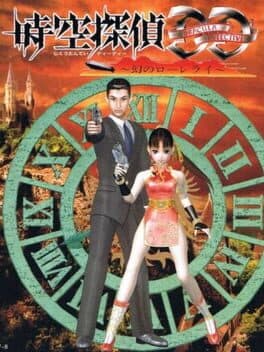
Jikuu Tantei DD: Maboroshi no Lorelei
System Sacom1996
Sci fi/noir detective-themed FMV first-person adventure game released for the PlayStation and Saturn in 1996 (Japan only). The game stars time-travelling vampire private eye Raizo (the titular "Dracula Detective") who travels from his native 2238 to 1939 Nazi Germany in order to find a client's missing father.
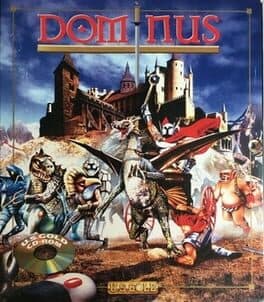
Dominus
Visual Concepts1994
Dominus is a strategy game developed by Visual Concepts and published by U.S. Gold, originally released for IBM PCs in 1994. Conversions to the Sega Mega Drive and SNES were in development around this time and were set to be published by Asciiware. However, for unknown reasons, both versions were cancelled. A prototype ROM of the Mega Drive version, dated 1993, has since been unearthed, showing an incomplete game without any sound.
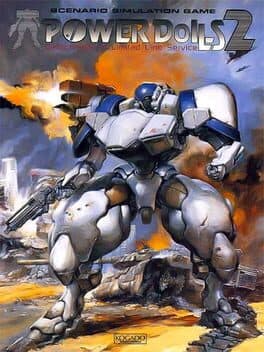
Power Dolls 2
Kogado Studio1994
Sequel featuring additional management complexities but otherwise follows similar turn based strategy approach through a mission by mission format of the original Power Dolls game.

Down the World: Mervil's Ambition
ASCII Corporation1994
Down the World: Mervil's Ambition is a Final Fantasy IV-like role-playing video game where the player takes the role as Mervil as he tries to become the most successful man in his world. This game was released for the Super Famicom in the fourth quarter of 1994. During the course of the game, he fights rough monsters, goes on perilous quests, and becomes tougher as he acquires stronger equipment and fights evil forces. The first fifteen minutes of the game is completely non-interactive, including the random monster fights.
Melfand Stories
Sting Entertainment1994
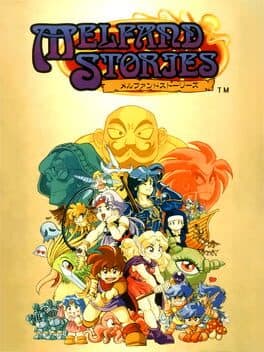
Melfand Stories is an side scrolling brawler with a cutesy fantasy theme. The player can use their weapons or their magic, or a combination thereof, to fight their way through various fantasy monsters and other enemies while finding items to help them out. The game has four playable characters and allows for up to two players to play simultaneously. The characters include the youthful hero El, the brash swordsman Corse, the elven mage Lemin and the whip-wielding rogue Nora.
Keeper
Fupac1993
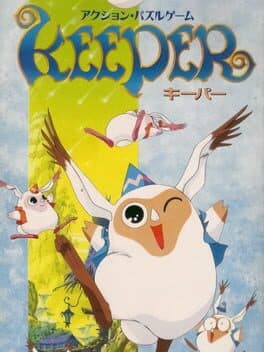
Keeper is an action/puzzle game developed by Fupac and published by Bullet-Proof Software, and released only in Japan for the Super Famicom.
Ardy Lightfoot
ASCII Corporation1993
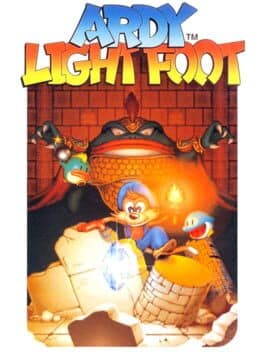
The story of the game is that the sacred rainbow has shattered into seven pieces and it's up to Ardy to obtain them all again. Whoever collects all seven pieces will receive one wish. An evil king named Visconti has already gotten one piece and is searching for the others. To this end he sends out various creatures and henchmen such as Beecroft, Catry and others. These creatures form the opponents for Ardy during the game. Ardy is assisted by friends along the way like the elder (unknown name), Nina, and a mysterious adventurer named Don Jacoby.
Wizardry Gaiden III: Scripture of the Dark
Sir-tech Software1993
Wizardry Gaiden III: Scripture of the Dark is a Role-Playing game, developed by Sir-Tech Software Inc. and published by ASCII Entertainment, which was released in Japan in 1993. While the first two Gaiden games, Wizardry Gaiden: Suffering of the Queen and Wizardry Gaiden II: Curse of the Ancient Emperor, stuck fairly close to each-other and to Wizardry V: Heart of the Maelstrom, Scripture of the Dark started introducing more radical changes to the formula. This was mostly in the form of incorporating elements of Wizardry VI: Bane of the Cosmic Forge, but retaining the core gameplay derived from Wizardry V.
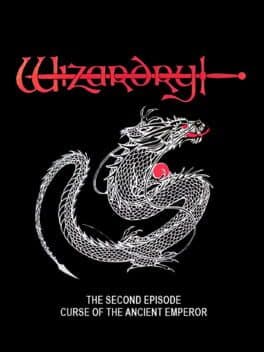
Wizardry Gaiden II: Curse of the Ancient Emperor
ASCII Corporation1993
Wizardry Gaiden II: Curse of the Ancient Emperor, published in 1992 by ASCII, was the second of the trilogy of Wizardry roleplaying games released for the original gray-scale Nintendo Game Boy portable video game system. .
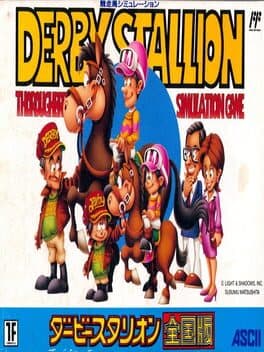
Derby Stallion Zengokuban
ASCII Corporation1992
Derby Stallion Zengokuban ("Zengokuban" roughly means "National Edition") is a Sports game, developed and published by ASCII Entertainment, which was released in Japan in 1992.
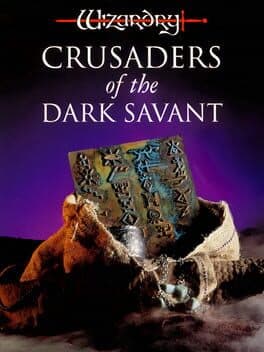
Wizardry: Crusaders of the Dark Savant
Sir-tech Software1992
Begin your adventure in Crusaders of the Dark Savant. Import your characters from Bane of the Cosmic Forge or create a new party capable of surviving the rigors of a strange alien world. Both friends and foes you'll discover as you search for the forgotten secret of a once madman - the secret of the very universe itself. And you won't be alone in your search. Others as enterprising as you have also entered this dimension. Only your actions - both past and present - will determine just how well you fare. From the depths of a dungeon to the blue and limitless skies, you'll see it all - you'll hear it all - in this latest Wizardry adventure.
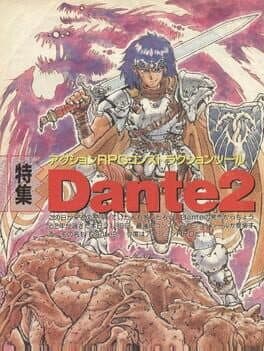
Action RPG Construction Tool: Dante 2
ASCII Corporation1992
A Y's-inspired sequel to Dante: RPG Construction Tool.
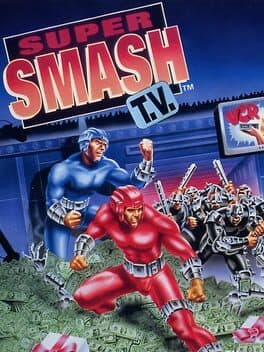
Super Smash T.V.
Beam Software1992
The Super Nintendo Entertainment System and Super Famicom port of Smash T.V. Smash T.V. was an arcade game created by Eugene Jarvis and Mark Turmell for Williams released in 1990. It is a dual-stick shooter in the same vein as its predecessor, Robotron: 2084 (also produced by Jarvis). As in the previous game, players battle waves of enemies by using guns. The plot of Smash TV revolves around a futuristic game show in which players compete for various prizes as well as their lives. As the Super Nintendo doesn't have dual stick controls, the ABXY buttons are used to aim the player's gun instead - for a total of 8 possible directions.

Best Keiba Derby Stallion
ASCII Corporation1991
Best Keiba Derby Stallion ("Best Race Derby Stallion") is a simulation game where the player has a stable and starting money and must raise champion racehorses. As well as training horses, they can breed them and, eventually, sell them once they grow too old to race. The player can also hire jockeys to ride their horses for races, and can gamble on races to earn a little extra funds. Best Keiba Derby Stallion began a long-running Derby Stallion franchise that persists to the present. It was only released in Japan.
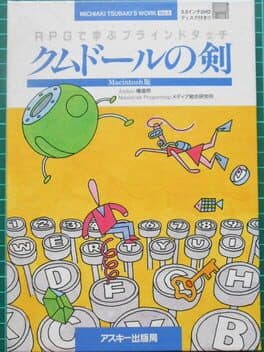
Kumdor no Ken
ASCII Corporation1991
In this touch-typing JRPG for PC-98, created by Michiaki Tsubaki with ASCII, you play as the Milky Way's #1 typist, summoned to planet Kumdor to fight mysterious monsters with typographic magic — but you lose all your keyboard keys and your QWERTY skills in a crash landing. Worse yet, the planet suffers from a petrified economy and natural disasters. Can you recover your skills, prove your identity, and save the world? The game has a surreal atmosphere, quirky dialogue, and a distinctive visual style. It also features a control scheme built entirely around touch typing, using no directional keys or joypad input. By improving your typing accuracy and agility, you must travel across a classic JRPG overworld, helping people and fighting off monsters to improve yourself.
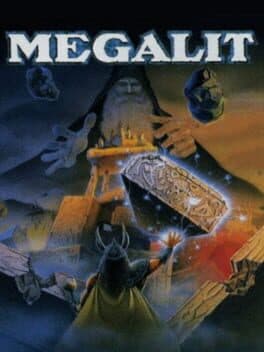
Megalit
ASCII Corporation1991
When a wicked witch decides to rule the world with the power of her magic jewels, her terrifying plot leads her to kidnap elves, princesses, and even fairies. You're the brave warrior who's decided to save all the captured innocents, but the witch gets wind of your plan and turns you to stone. Now, your efforts turn to breaking the spell, which is going to require cracking the ancient puzzle of Megalit. If the princesses and magical beings stand any chance of making it out of the witch's clutches, you'd better solve the code quickly.
Solitaire Poker
ASCII Corporation1989
Try your hand at the hottest video poker game around! Even seasoned veterans will find Solitaire Poker a welcome challenge!
Ishidó: The Way of Stones
Software Resources International1988
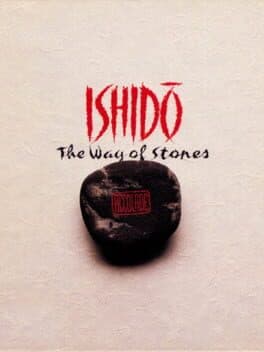
Ishido: The Way of Stones is a puzzle video game released in 1990 by Accolade and developed by Publishing International. It was designed by Michael Feinberg and programmed by Ian Gilman and Michael Sandige. Producer was Brad Fregger, and Brodie Lockard (the designer of the Shanghai computer game) contributed with graphics. "One misty spring morning in 1989, in the remote mountains of China's Han Shan province, a Mendicant monk of the Northern School of the White Crane branch of Taoism, walked silently out through the front gates of the Heavenly Peak Temple The monk carried a stone board, a set of seventy-two carved stone pieces, and an ancient scroll inscribed with brush and ink in elegant calligraphic script. He also carried with him a secret which had lain cloistered and hidden for thousands of years."
Wizardry: The Return of Werdna - The Fourth Scenario
Sir-tech Software1987
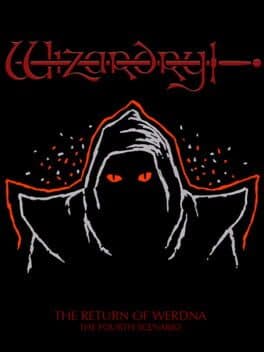
The fourth game in the Wizardry series, The Return of Werdna takes a decidedly different approach from all the games that preceded it. Instead of playing as a party of six player-generated characters, the player controls Werdna himself, the evil Archmage from the first game. It seems that after Werdna was defeated by the party of adventurers who stole his amulet, he was imprisoned at the bottom of his ten-level labyrinth in an eternal slumber to be tortured by nightmares for eternity. Although Werdna was supposed to sleep forever, somehow he has awakened, and now he is out for revenge. At the beginning of the game Werdna finds himself in a situation that is singularly unique for most arch-villains: he is stripped of his powers, trapped within his own former stronghold, and filled with the realization that the same traps and monsters he created to keep adventurers out now act as obstacles to his freedom. Werdna will slowly regain his magical powers as well as have the ability to summon helpful monsters to accompany him on his journey and aid him in combat. Unlike other role-playing games, no experience is awarded for defeating enemies. Instead, Werdna can only become stronger by searching for pentagrams found in the labyrinth. Accessing a new pentagram allows Werdna to summon stronger monsters and restore his health and spellcasting powers. Werdna will have to fight a variety of monsters and guardians, but many of the randomly appearing enemies in the game are parties of adventurers not unlike those who were controlled by the player in the previous three games. In addition, Werdna is being chased by the rather ticked-off ghost of his old enemy Trebor. The game features a somewhat tweaked version of the same engine and graphics used in the earlier installments of the series. The difficulty level has been increased due to the lack of an experience points system, which often leaves the player-controlled party underpowered. The labyrinth contains abundant traps and complex mazes. For obvious reasons it is no longer possible to import characters from the previous games. The game features three different endings: a good ending, an evil ending, and a special Grandmaster ending which is often considered to be the single most difficult task to achieve in the entire series.
Otocky
Sedic Inc.1987
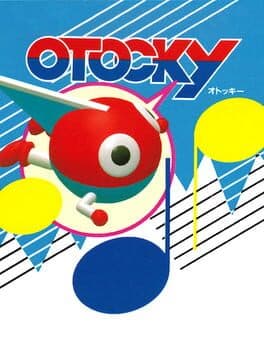
Otocky can be described as a musical side-scrolling shoot 'em up. The player's spaceship has a ball for a weapon, which can be fired in eight directions; each direction corresponds to a different musical note. The note plays when the player presses the fire button, and is also quantized in time so that it matches the beat playing in the background. By using the weapon selectively the player can improvise music while playing.
Professional Mahjong Gokuu
Chat Noir1987
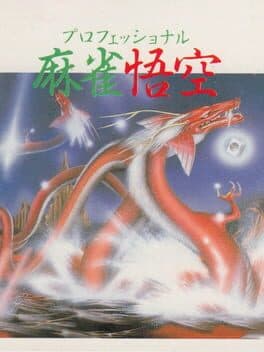
This ASCII-published mahjong game was released for the Famicom Disk System in 1986. It was not released outside of Japan. Professional Mahjong Goku is the third game for the Famicom to be based on Mahjong, the competitive tile game popular in China and Japan. It is a four-person version of the game, which is generally how the game is played in real life, though uncommon in simulations during this era due to the additional computing power needed for three AI opponents. As a "professional" Mahjong game, there is an opportunity to play a mode where the player can gamble on outcomes beforehand. The amount of cash gained or lost is usually based on the quality of the winning hand, but occasionally the player can also make bets to increase their take should they win (though, of course, any money gambled in this way is lost if someone else wins the hand).
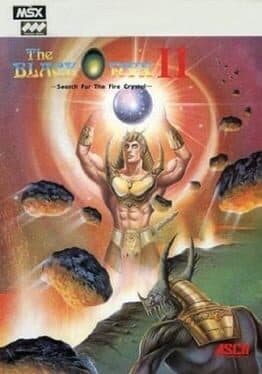
The Black Onyx II: Search for the Fire Crystal
Bullet-Proof Software1986
After having recovered the legendary Black Onyx in your previous adventure, your party of heroes took the portal in Utsuro town to a new world, where they begin the search for the powerful Fire Crystal. In order to find this mysterious artifact, they have to venture into a system of dungeons and to defeat the monsters that live in them. The sequel to Black Onyx is very similar to its predecessor, graphically as well as gameplay-wise. You build a party of up to five adventurers and take them to fight in first-person 3D dungeons. You encounter random enemies as well as fellow adventurers, whom you can recruit to your party if it is not full.
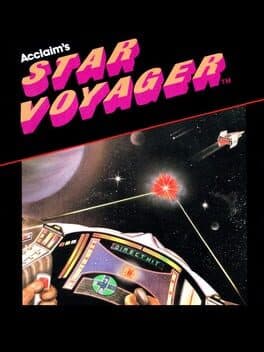
Star Voyager
ASCII Corporation1986
Star Voyager is an outer space shooter for the NES. It was originally developed in Japan by ASCII Entertainment, and released as Cosmo Genesis at the very end of 1986. Acclaim picked up the rights to release the game in the United States and changed the title. The gameplay is heavily based on Atari's original Star Raiders concept. Another Famicom game built on this concept is Namco's Star Luster, which many players regard as the better quality game out of the two. Star Voyager is a first-person shooter from inside the cockpit of a spaceship. The player navigates through different quadrants contained in a galactic map. Different sections of the ship can sustain damage, but this damage can be repaired by visiting a space station.

Namida no Sokoban Special
1986
It is your goal to push a number of crates onto certain spots in order to finish a level. Finding the right way to move all the crates on the right spots becomes increasingly difficult and you have to plan numerous steps in advance in order not to block your own way.

Balance of Power: Geopolitics in the Nuclear Age
1985
It has been more than forty years since the first nuclear bomb exploded. In that time, the shape of the world has changed dramatically. The power to destroy civilization rests in the hands of the superpowers and now, as either the president of the U.S. or as the General Secretary of the U.S.S.R., you have total responsibility for your nation's course. To succeed, you must enhance your country's prestige without infringing too much on your adversary's interests. If you play the isolationist, you will find yourself alone in a world dominated by your opponent. If you are too aggressive, you could unleash the war that annihilates humankind- and both sides lose. Balance Of Power uses a huge statistical database, a meticulously detailed display of the world, and advanced artificial intelligence techniques to put you in command of one of the world's superpowers. You have vast amounts of information available as you press your country's interest and resist the pressure of the other side. Noted game designer Chris Crawford has created a model of the world which will entertain, educate, challenge, and perhaps frighten you in ways no computer game has ever done before. Covers the eight years from 1986 to 1994.
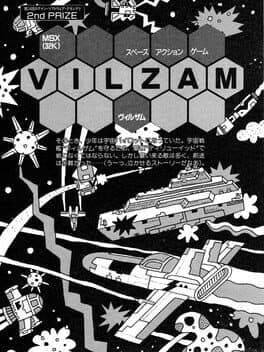
Vilzam: Cosmic Struggle
1985
Developed by Yuichi Toyama. Won Second place of the Login Magazine programming contest. Listing was published in the December 1985 magazine.
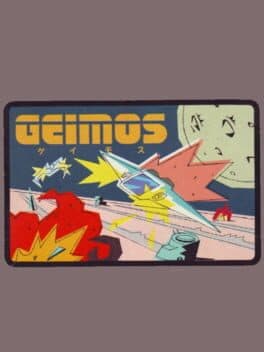
Geimos
Micronics1985
An early pseudo-3D shoot-em-up for the Nintendo Famicom developed by Micronics and published by ASCII.
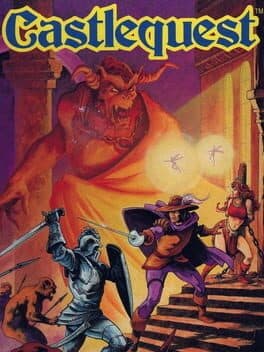
Castlequest
ASCII Corporation1985
The object of the game is to navigate through Groken Castle to rescue Princess Margarita. The player can push certain objects throughout the game to accomplish progress. In some rooms, the prince can only advance to the next room by aligning cement blocks, Honey Jars, Candle Cakes, and Elevator Controlling Block.
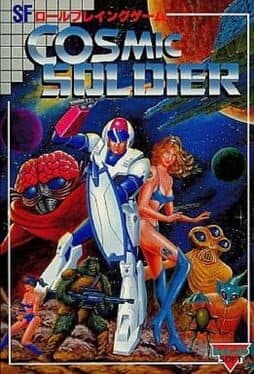
Cosmic Soldier
Kogado Studio1985
In the game, you must locate 3 data cards and 4 "filters" that allow access to a secret file in the enemy data bank. Data cards and filters are located in different stars of the Quila system, which can be reached immediately via an air shuttle; all the information you need in order to locate the items can be obtained by talking to enemies. Once the items are in your possession, you must locate the data bank and get the file.
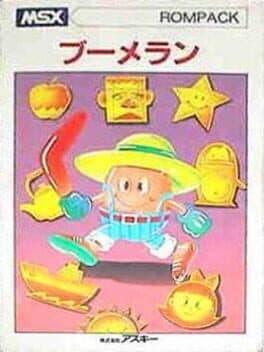
Boomerang
ASCII Corporation1984
You control a boy walking through a platform maze trying to collect items while being chased by enemies. They can be killed by using the boomerang. The boomerang has a limited range and, if thrown, must always picked up. It will not return to you.
F-16 Fighting Falcon
Nexa Corporation1984
A first-person jet fighter simulation game created for the Japanese MSX and ported to the Sega Master System. Also known as F-16 Fighter. The goal is to fly an F-16 and take down opponents in dogfights.
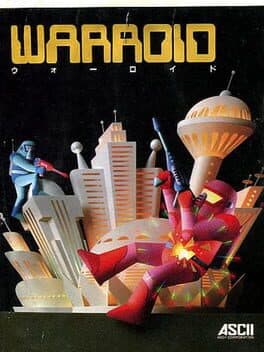
Warroid
1984
As the pilot of the United Nation's new FX1-BS weapon, you fall from the moon land land on Earth, now occupied by the Exoa aliens, and must defeat as many of their own warroids as possible. Warroid pits two players (or one player and the AI) against each other in a robot versus robot fight. Your goal: shoot the enemy until it has no energy left! Destroying the enemy warroid will give the victor one point on the six-point scale (players start out with three points each). Once all points are lit in the player's color, the player wins the game. Each warroid auto-aims their weapon fire, but kick attacks only work at close range. There are multiple platform-laden levels for players to fight in. You can also press the escape key to bring up a menu for setting handicaps and changing warroid colors. [Expanded from MobyGames]
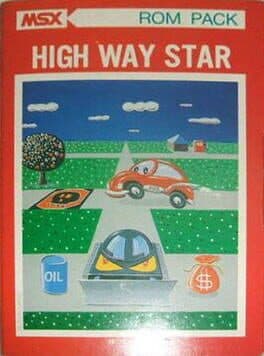
High Way Star
1984
With its multi-level intersections and 90 degree turns, this is a future country town. In your "Tomato" car you must obey the directions shown on the map and clear as many white flags as possible. But be careful! The skull chasing you is the skull of death and the bad guys in black are always after you. Look out--if you spend too much time escaping you run out of gas.
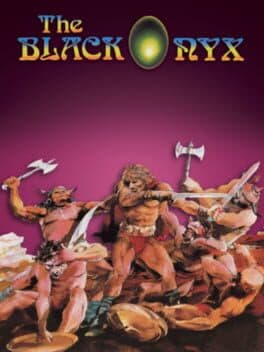
The Black Onyx
Bullet-Proof Software1984
The Black Onyx is a role-playing game developed by Bullet Proof Software. It was released, among other consoles and computers, for the SG-1000 in 1987. It was the last SG-1000 game to be released in card form, and the last to be published by Sega, but it is currently unknown as to whether it was the last SG-1000 game. MSX and PC-8801 versions had been released in 1983 and 1984, respectively, meaning this version is unusually late. The game was followed by The Black Onyx II: Search For The Fire Crystal, which saw its original MSX release in 1984.

Mole
ASCII Corporation1983
Mole is a whack-a-mole type of game where the objective is to hit on the head of colored moles as they emerge from 8 holes situated in cardinal and ordinal directions from the center of the field. However, the color of the mallet changes frequently and the player has to respond to it because hitting a mole of the same color as the mallet will result in decrease of the score bar. If the player is unable to fill the score in time (indicated by a timer bar), the game is lost. There are 9 difficulty levels, with higher difficulty featuring more frequent appearance of moles of the same color as the mallet, thus requiring more attention of the player.
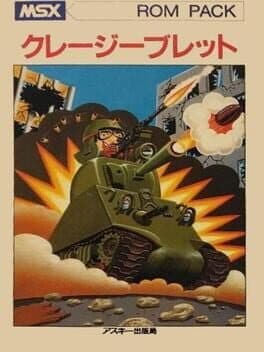
Crazy Bullet
ASCII Corporation1983
Crazy Bullet is a variant of the arcade game Tank. As in that game, there is a top-down view of an arena containing two equally equipped tanks who engage in a fight to the death. Each tank can fire a bullet at a time, and move to avoid the opponent's fire. Contact with a bullet will destroy your tank, earning your opponent a point, and the first player to five points wins the contest. The current game has a couple of important differences from the original. The most important is that bullets do not just travel in a straight line after you fire them. They move in the direction in which you last directed your tank. This allows you to fire around corners, and even to shoot yourself (gifting your opponent a free point). Secondly, there are a number of different arenas which can be chosen, with different wall layouts. Some of these layouts also include a turn-style which allows you to pass but stops any pursuing bullets. Finally there are two speed settings (for fast and slow bullets).
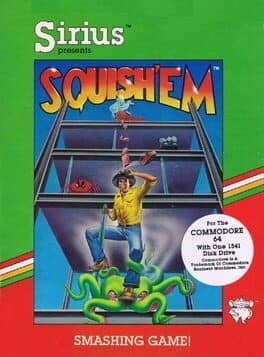
Squish 'em
Sirius Software1983
A action game written by Tony Ngo that was published for various 8-bit platforms. The player controls Sam who must climb to the top of a 48 story building and collect a suitcase full of money while avoiding being knocked off the building by a variety of creepy creatures or falling objects.
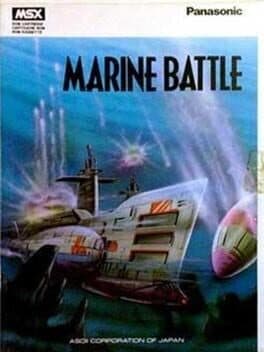
Marine Battle
ASCII Corporation1983
Marine Battle is an arcade shooter which pits your destroyer against a multitude of aerial and naval forces. Your ship can move back and forth across the top of the water, and can fire directly upwards at planes or downwards at submarines or the elusive ghost ship whose shadowy presence occasionally manifests itself at the bottom of the screen. Both planes and submarines may fire back at you, and the goal for a given level is to destroy a certain number of submarines before a timer runs out and while avoiding incoming fire. Destroying a plane will cause its pilot to bail out into the water, and he may be collected for extra points. Your war ship also has a finite amount of ammunition, and a limit on the number of bombs/shots in the air at any one time. When ammo supply runs low, a resupply ship appears at the side of the screen allowing you to restock. Later levels increase the rate of fire of all of the enemies, and the game continues with increasing difficulty until you eventually lose all your lives.
Wizardry: Legacy of Llylgamyn - The Third Scenario
Sir-tech Software1983
A generation has passed since your band of adventurers reclaimed the Staff of Gnilda and the armor of the Knight of Diamonds, and the land has been at peace. But now nature itself seems to be attacking the land of Llylgamyn, as earthquakes and tidal waves ravage the land. The Sages believe the Orb of Scrying is the city's salvation, but it is guarded by the dragon L'kbreth. A band of explorers must once again venture forth in search of the Orb.
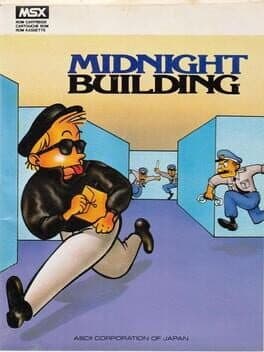
Midnight Building
1983
In Midnight Building you control a man who is running around in a dark labyrinth. You'll start at floor eight and work all the way down to floor one. At the beginning of each round the labyrinth floor is shortly visible, giving you the opportunity to locate the keys and the vault in the labyrinth. After a few seconds the labyrinth turns black. Only your direct surroundings of the labyrinth lightened. Now it becomes your goal to collect all the keys, open the vault with the collected keys and then return to the middle of the labyrinth to enter the door and go to the next floor. There are at least three hostile green men running around in the labyrinth who are trying to catch you. You'll loose a life when they catch you.
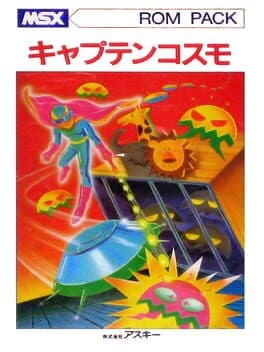
Captain Cosmo
Nexa Corporation1982
Captain Cosmo is an Action game which was released in Japan in 1984.
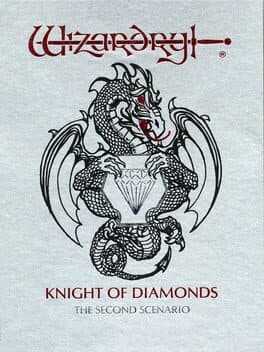
Wizardry: Knight of Diamonds - The Second Scenario
Sir-tech Software1982
Are you ready to take the next step into the world of Wizardry? A step so dangerous, the mere utterance of a spell can decimate the entire city of Llylgamyn. Knight of Diamonds is the Second Scenario in the Wizardry Master Series, the fantasy role-playing simulation for the Nintendo Entertainment System. In Wizardr Knight of Diamonds, only the bravest may venture through murky dungeons more dangerous than any ever encountered by earthly mortals. Only the most cunning may recover the magical Staff of Gailda and save the city of Llylgamyn.