-
Average rating
20
Games
0
Votes cast
Heartbeat
Shipped Titles
Games (20)
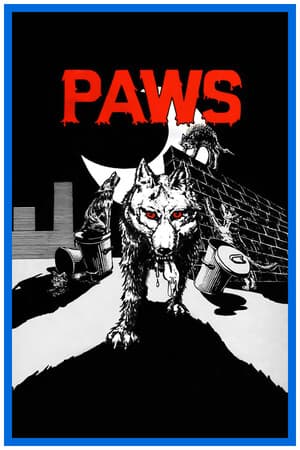
Paws (CPC/Spectrum)
Artic Computing2023
In this unique top-down game from 1985, you are a mother cat whose twelve young kittens have wandered off into a labarinthine town prowled by fearsome dogs. Can you save them all?
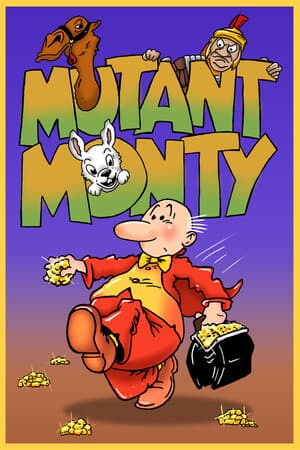
Mutant Monty (C64/CPC/Spectrum)
Artic Computing2023
In this surreal game, released in 1984 for home computers by Artic Computing, dodge dangerous enemies and collect gold across 40 fiendishly difficult levels. Levels include such bizarre environments as the Pit of Eternal Slime, the inside of a neutron accelerator, and the desolate wastes of Pithor.
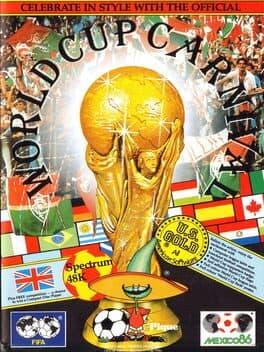
World Cup Carnival
U.S. Gold1986
World Cup Carnival is the first soccer (football) game utilizing the official FIFA license. The game was actually football games from Artic Computing and repackaged to coincide with the FIFA World Cup in Mexico in 1986.
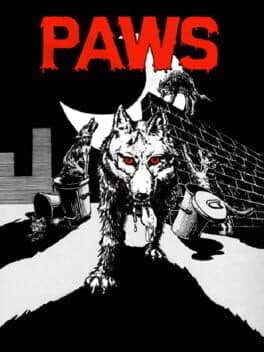
Paws
Artic Computing Ltd.1985
In this unique top-down game from 1985, you are a mother cat whose twelve young kittens have wandered off into a labarinthine town prowled by fearsome dogs. Can you save them all?
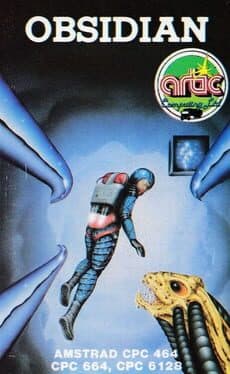
Obsidian
Tony Warriner1985
Arcade exploration game released on the Amstrad CPC computer family.

Mutant Monty
1984
You have to collect all the gold nuggets in the room displayed within a certain time limit in order to become rich and save the princess.
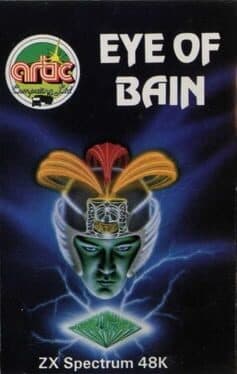
Eye of Bain
Artic Computing Ltd.1984
You search for the Eye of Bain - a sacred emerald.
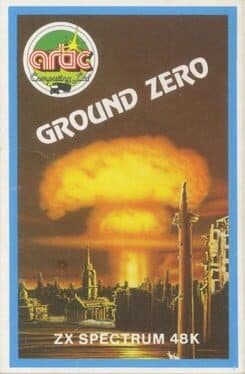
Ground Zero
Artic Computing Ltd.1984
After waking up you learn from TV that the world is on the brink of nuclear war. You start preparing for the worst...
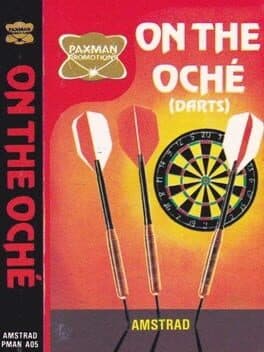
On the oche
Artic Computing Ltd.1984
On the Oche is a Sports game, developed and published by Artic Computing Ltd., which was released in Europe in 1984.
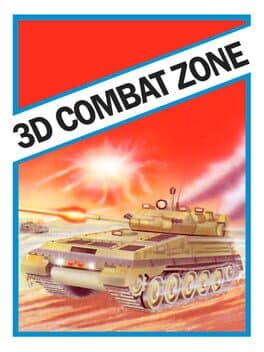
3D Combat Zone
Artic Computing1983
In this wireframe graphics FPS game, originally released for the ZX Spectrum in 1983, take on the role of a tank commander in a post-apocalyptic wasteland, struggling to survive against other tanks, deadly flying saucers, and the fearsome super tanks.
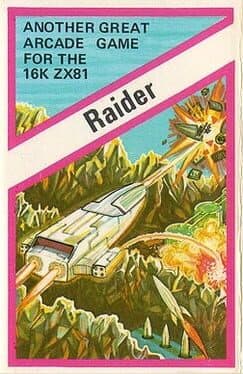
Raider
Artic Computing1983
Raider is a Scramble clone that has you flying over the surface of a planet before flying through a cavern bombing the installations and missile dumps. As you fly, missiles and aliens will fly towards you and you can either bomb them or use your laser. You are able to move your craft up or down, and left or right to avoid the missiles and aliens as well. If you hit a missile, alien or the planet's surface then you lose one of three lives. A fuel gauge decreases as you fly but you can increase it by bombing fuel dumps.
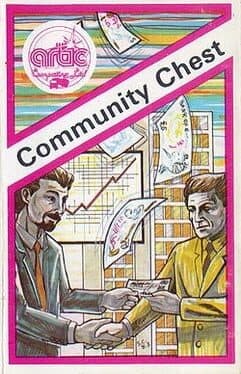
Community Chest
Artic Computing Ltd.1983
Community Chest is based on the game Monopoly and is a smaller version of the game. You play the computer and try to make money without going bankrupt. The game has 16 squares with 13 squares named after London streets, Community Chance, Jail and a Go square. The street squares are split into six sets. Each player takes it in turns to throw a dice to move their counter and if a street square is landed on then the player has a choice to buy it if the player has enough money. If the player has brought a street to make up a set then houses can be brought and placed on the square. As the players move buying streets and a player lands on a street square owned by the other player then that player has to pay rent and the cost depends on how expensive the street is and if there are any houses on it. Landing on a Community Chance square reveals an incident and this can either lose or gain the player money. The Jail square forces the player to pay a fee and if a player passes the Go square then they receive £2000. A player will lose the game if they go bankrupt.
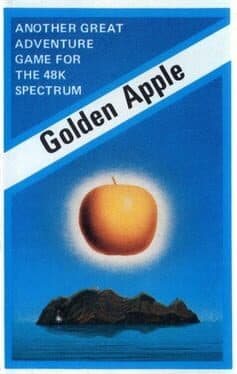
Golden Apple
Artic Computing Ltd.1983
You have to find the legendary Golden Apple among other treasures.
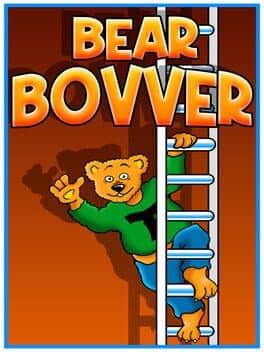
Bear Bovver
Artic Computing Ltd.1983
In this classic arcade-style platformer from 1983, take on the role of Ted the Bear, proud owner of a shiny new Sinclair electric truck - looking to find some batteries to power it. Also contains 'Baby Bear' mode, which allows you to play without enemies.
1K Games
Artic Computing Ltd.1982
1K Games Pack is a collection of 11 games and programs on one tape. The collection consists of: Slot machine: You have 10p and you play a slot machine for 1p a go trying to get three numbers the same (10p) or the numbers add up to seven (5p). Etch and Sketch: This a program that allows you to draw pictures and shapes with a cursor. Slalom: Gates move down the screen and you have to align yourself to go through them without hitting them or missing them altogether. Catch me if you can: You must move an X to catch a O that moves about the screen. Space Pirate: You must attempt to dock your spaceship as it moves down the screen with another ship that moves left and right across the screen. Spacefire 1: You are on the left of the screen while the computer is on the right, firing bullets at each other attempting to hit the other player. Spacefire 2: Same as 1 but now the computer moves left across the screen. Car Crash: You must drive your car down the screen avoiding the other vehicles and the sides of the road. Man-Eating Budgies: You are on the top of the screen and Budgies move up the screen and you must avoid them while collecting their eggs. Maze: You are on the top of the screen and a maze moves upwards and you must navigate through it without hitting the walls. The Wall: You move right across the screen and you must remove every part of a wall that moves slowly upwards.
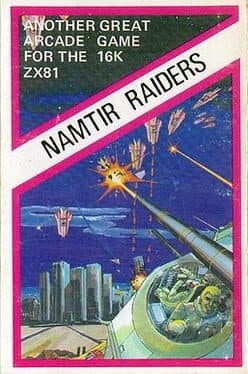
Namtir Raiders
Artic Computing1982
Namtir Raiders is a fixed screen shoot 'em up. The objective is simply to shoot down as many enemy raiders as possible and save the earth. There are four waves of enemies and each wave has a different kind of enemy. The movement of the ship is a bit different from other shoot 'em ups. Rather than having keys for up, down, left and right, they here lead to diagonal moves (for example up and left, down and right). The player has five lives and earns more when all four waves have been completed. Once they have the game starts over with the first wave. A difficulty level between one and three can be chosen before the game begins. The higher levels run at a higher pace.
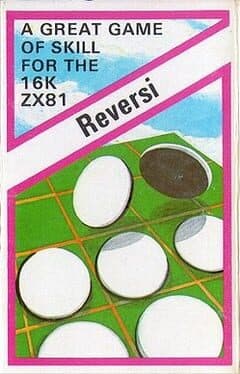
Reversi
Artic Computing Ltd.1982
Artic Computing's take on Reversi
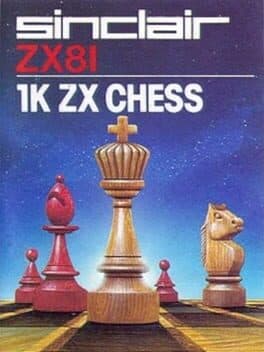
1K ZX Chess
1982
Chess game developed for home computer Sinclair ZX81. Game code takes up only 672 bytes in memory, but implements all chess rules except for castling, promotion, and en passant, including a computer opponent. It was the smallest implementation of chess on any computer at the time.
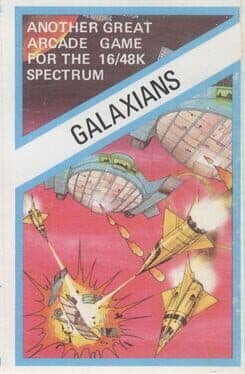
Galaxians
Artic Computing1982
Galaxians is a clone of Galaxian. The player's goal is to destroy a matrix of enemy spaceships which is gradually descending on the screen. Single ships will sometimes leave the formation and bombard the player with multiple shots. There's only a single scenario with a single type of spaceship. The process repeats itself when a squadron is completely eliminated, but the difficulty increases.
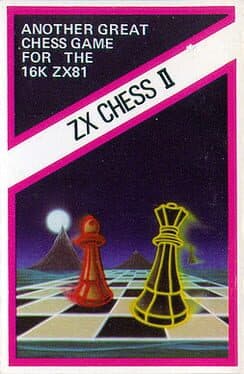
ZX Chess II
Artic Computing Ltd.1981
ZX Chess II is an improved version of ZX Chess I, a single-player chess game. In addition to the features of the previous version (custom board setup, printing etc.), the code enhancements include additional difficulty level, faster move calculation and an option for the player to ask the program to suggest a move.