-
Average rating
16
Games
0
Votes cast
Heartbeat
Shipped Titles
Games (16)
World Heroes
Alpha Denshi1992
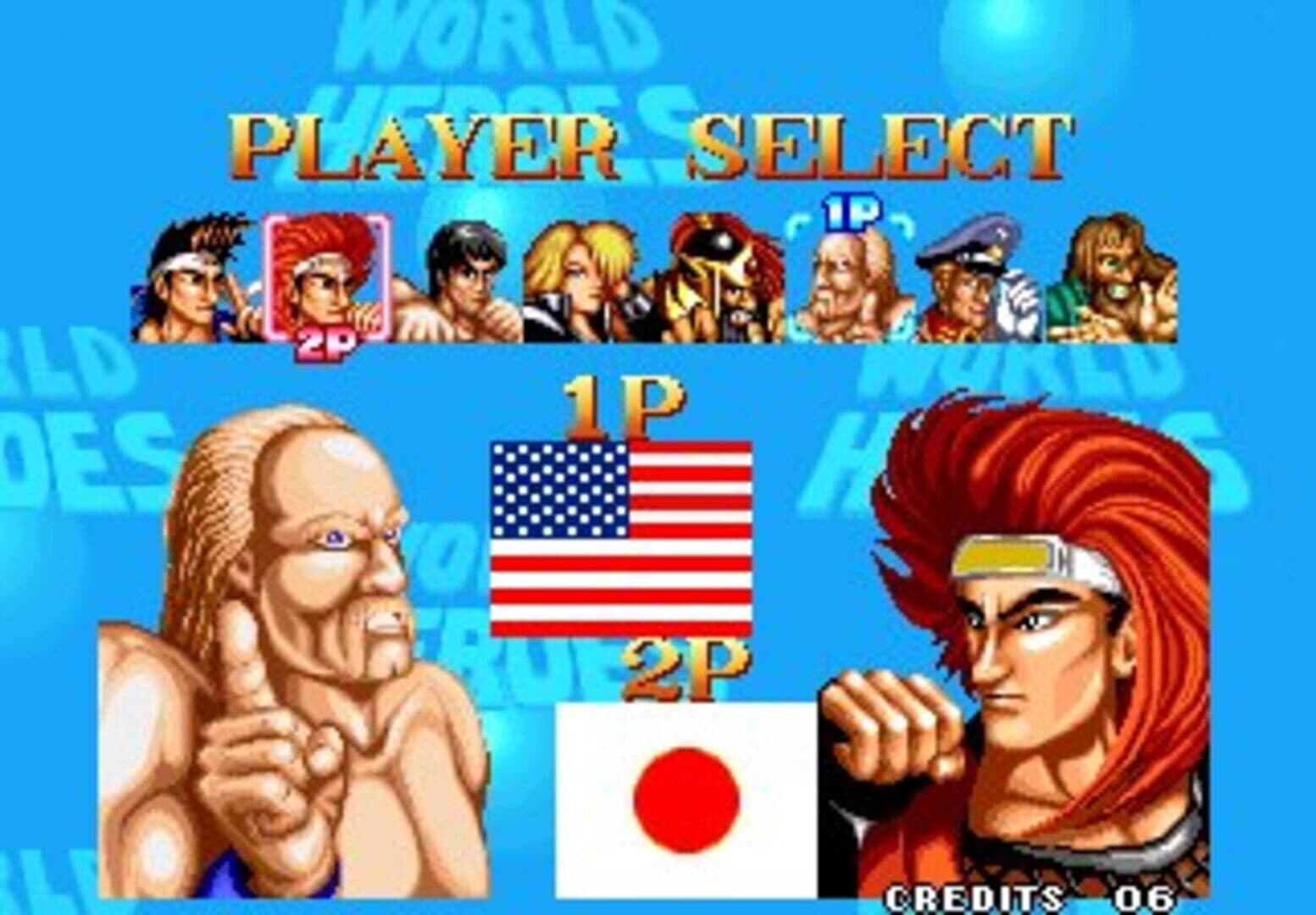
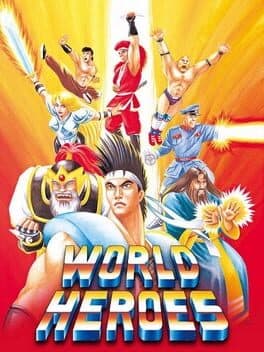
Are you ready for a fierce battle in an ultra-deathmatch!? Who is the greatest hero in the world? You will find out today! A scientist has created a time machine that eight heroes will travel through time with to prove who is the greatest fighter of all time!
Ninja Commando
Alpha Denshi1992
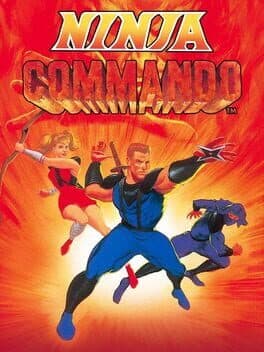
Ninja Commando is a vertically scrolling action game released by ADK in 1992. Players choose from among three ninjas - Joe, descended from the Koga ninja; Rayar, a woman who has learned the ways of the Iga ninja; and Ryu, descendant of the famous ninja Fuma Kotaro - as they pursue the merchant of death known as Spider, who plans to use a time machine to bring havoc to the world. The battle spans seven time periods, including the Stone Age, the Egyptian era and the Japanese Civil War era.
Crossed Swords
Alpha Denshi1991
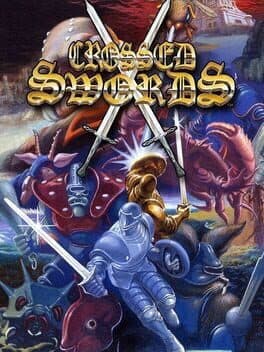
Crossed Swords is a hack & slash action RPG arcade game developed by Alpha Denshi and published by SNK for the Neo Geo arcade system in 1990 and Neo Geo console in 1991. Its gameplay was similar to SNK's earlier 1990 first-person shooter and beat 'em up game, The Super Spy, but with role-playing game elements and hack & slash combat instead of shooting and fist-fighting.[1] The game allowed cooperative gameplay with up to two players on the same screen.[1] As only the player characters' silhouettes are visible on screen as wire-frame models, much like Punch-Out!!,[2] the game's perspective may be considered either first-person[1] or third-person.[3] The game was later cited as an inspiration for the 2010 first-person fighting game Rage of the Gladiator.[4] A sequel of the game entitled Crossed Swords 2 was released in Japan on May 2, 1995 for the Neo-Geo CD, and was one of the few games designed specifically for the Neo-Geo CD, rather than being an arcade port.[5]
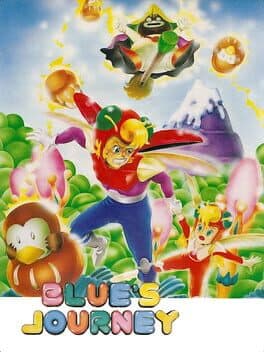
Blue's Journey
Alpha Denshi1991
The planet Raguy was once a beautiful place, until the evil Daruma tribe invaded, bringing pollution that corrupted the land. You, as Blue, are a specialist of the Leaf Dump, and you love Princess Fa of the Raguy family. Unfortunately, Princess Fa has fallen sick from the pollution. It's your job to save your princess in Blue's Journey, a 2D side-scrolling platformer with RPG elements. Go through stages jumping on platforms and avoiding traps, while dealing with a multitude of bad guys, with a special bad guy boss at the end of every level to defeat with special means. To help with this, Blue can use a leaf attack and shrink. The leaf attack, only used when Blue is full sized, lets Blue slam a leaf that stuns any enemies he hits. Blue can also pick up power-ups for a more devastating leaf attack, or change his attack entirely. When the enemies are stunned, Blue can pick them up and throw them across the screen to dispose of more baddies. Shrunken down Blue can't use his attacking power, but he can fit into small crevasses and crannies not normally accessible. Of course, Blue can also dispatch enemies by jumping on them. Since Raguy's economy is flower based, Blue can collect flowers to buy things at special huts. But Blue must take care not to fall into traps or bottomless pits, which cause instant death. Being hit by bad guys or their shots is just as bad. Blue starts the game with two hearts, losing one when he gets whacked by a bad guy. When his heart count goes to zero, Blue dies. Play the game alone (as Blue), or with your friend (as a green Blue) for two-player simultaneous fun.
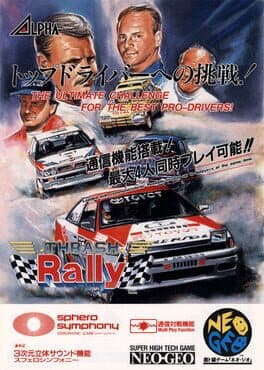
Thrash Rally
1991
ADK's early arcade rally-racing game for the Neo Geo hardware, featuring stages based on real events (most notably the Dakar Rally).
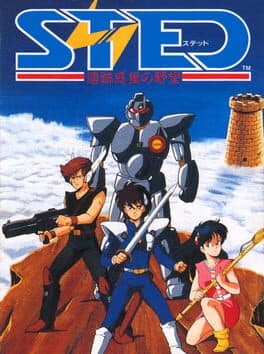
STED: Iseki Wakusei no Yabou
Alpha Denshi1990
STED: Iseki Wakusei no Yabou ("STED: Starfield of Memorable Relics") is a science-fiction roleplaying game developed for the Nintendo Entertainment System by Alpha Denshi and published by K. Amusement Leasing on July 27th, 1990 in Japan. The game takes place during "Star date 0991" and has the player take control of a group of heroes as they track down a distress signal sent from a distant planet just as a significant rise in "monster activity" has been detected.
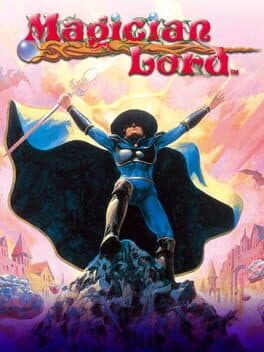
Magician Lord
Alpha Denshi1990
Magician Lord is a side-scrolling platform game that was a launch title for both the Neo-Geo MVS (arcade) and AES (home) systems, and was one of the pack-in games for the Neo-Geo AES. The game was re-released through the Virtual Console download service in Europe and Australia on October 26, 2007, and in North America on October 29, 2007. It was later released for the PlayStation 3 and PlayStation Portable through the PlayStation Store. It was previously included in SNK Arcade Classics Vol. 1, released for the Wii, PlayStation 2 and PlayStation Portable in North America on May 1, 2008.
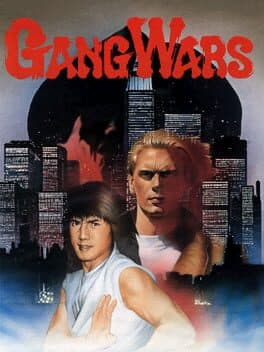
Gang Wars
Alpha Denshi1989
In Gang Wars, up to two players can control two different characters with different fighting styles. Gang Wars has a control configuration that is composed of two attack buttons (punch and kick), as well a jump button to fight against enemies or overcome obstacles. Players have access to a repertoire of techniques by pushing these buttons individually or in combination. Unlike Double Dragon, Gang Wars has fire arms (much like SNK's P.O.W.: Prisoners of War, except Gang Wars has both an assault rifle and a flamethrower), has a small amount of blood, has cut scenes, has two completely different playable characters and has a feature for customizing three fighting statistics (Power, Speed and Guard) for both players. Players will earn a certain number of points for increasing their fighting statistics.
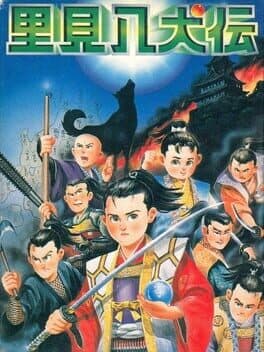
Satomi Hakkenden
Alpha Denshi1989
A Famicom RPG based on a famous Japanese novel series of the same name. It was developed by Alpha Denshi and published by SNK. Satomi Hakkenden (usually translated as "The Eight Dog Chronicles") was a long-running 19th century novel series about eight samurais from the Sengoku period and their various adventures. It was in some ways partly inspired by the ancient Chinese epic The Water Margin, which has itself seen video game adaptations in the form of the Suikoden games. Receiving numerous TV and film adaptations, including the 1983 film known in the west as Legend of the Eight Samurai, Satomi Hakkenden would be its first video game adaptation. Makai Hakkenden Shada for the Turbografx-16, also released in 1989, would be a later adaptation. The game itself plays much like Dragon Quest; a common source of inspiration for 8-bit RPGs. The player can walk around towns conversing with NPCs, equipping themselves with weapons and armor and receiving quests and directions to new areas before leaving the safety of the town to fight random encounters on the overworld map that links locations together. Combat follows the tactical turn-based pattern, allowing the player input their characters' desired actions before watching each turn play out. Most of the enemies in the game are based on classical Japanese monsters, usually youkai.
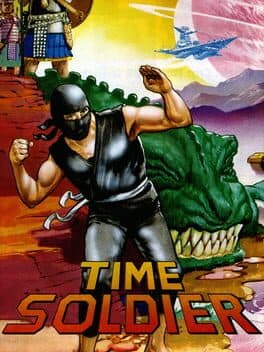
Time Soldiers
Alpha Denshi1987
Travel throughout various time periods to save your fellow comrades. Collect power-ups to help you defeat a variety of enemies and end-bosses. Uses rotary joysticks to allow player to fire in a variety of directions.
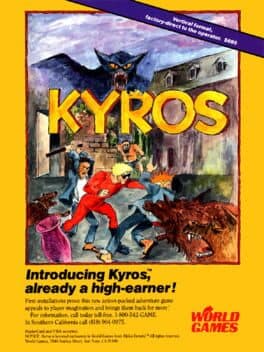
Kyros
Alpha Denshi1986
A top-down beat 'em up from Alpha Denshi, licensed by World Games, Inc.
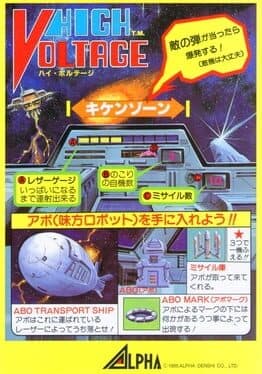
High Voltage
Alpha Denshi1985
A space combat game from Alpha Denshi.
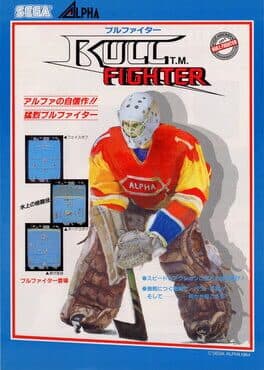
Bull Fighter
Alpha Denshi1984
An ice hockey game from Alpha Denshi.
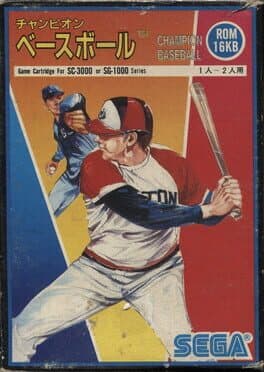
Champion Baseball
Alpha Denshi1983
Player chooses team and plays baseball against computer. Game ends when player is tied or losing at the end of an inning or nine innings have been played.
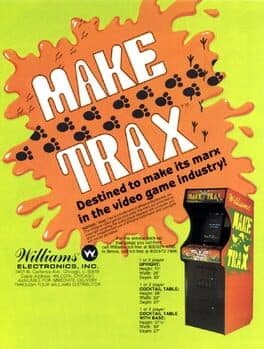
Make Trax
Alpha Denshi1981
Player controls a paintbrush to paint paths within a maze. The player is harassed by two fish which can be temporarily destroyed by running them over with a one of two paint rollers located near the maze center. A critter occasionally emerges to leave footprints on painted areas which must then be repainted.
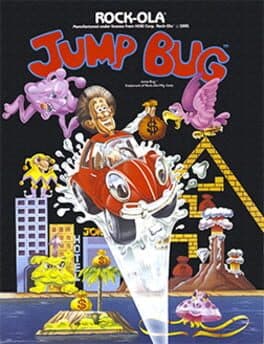
Jump Bug
Hoei1981
The player controls a constantly bouncing car while driving through various environments including a city, pyramid, and underwater. The height of the jump and speed of a fall can be controlled with the joystick. The player can shoot various enemies that appear. Points are gained by collecting treasure, killing enemies and jumping on clouds.