Dispatch
Dispatch
Keep Reading

 Bombjack
Video gaming is for everyone. Discover how the landscape is changing for gamers with disabilities.
Video gaming is a pastime that should be open to everyone. That includes gamers with disabilities or impairments. Thanks to the rise of accessibility in video games, the possibilities are now greater than ever.
Accessibility in gaming has been a hot topic for several years and the developments should be of huge interest to developers, designers, able-bodied gamers and of course, disabled gamers. A better understanding of the new virtual landscape can create a better gaming arena for all.
This We The Players guide to the rise of accessibility in video games will answer all of your burning questions, including but not limited to:
What is accessibility in video gaming?
Why should creators and developers care?
Who can benefit from accessible video games?
Which games on the market offer accessibility features?
What does the future hold for accessibility in video games?
Let’s play on.
“To make a game more accessible is to make a better, kinder game.”
-Brenden Gibbons, Game & Narrative Designer
Video games should be as accessible as reasonably possible to as many people as reasonably possible.
Accessibility means avoiding unnecessary mismatch between a player’s capabilities and the barriers a game presents, avoiding unnecessary barriers that get between a player and the kind of experience a developer wants them to have. The solutions to these barriers encompass making games accessible by design, providing options to allow barriers to flex in line with human variance, as well as considerations within the platform itself, and sometimes external pieces of assistive software and hardware too.
Accessibility considerations provide a broad range of benefits to the player, whether it be to help tell the story, assisting with motor skills or providing therapeutic results. Meanwhile, the game is open to a far more diverse audience, with FT explaining that “the number of players using accessibility features in games, from subtitles to one-handed control systems, far exceeds the number of disabled gamers.” The subtitles in Assassin’s Creed Origins were actively turned on by 60% of their players, so for the next game in the series, Odyssey, they were turned on by default - and 97% of players left them on. This is because when you solve for a permanent physical impairment, like having no hearing, you’re also designing for temporary impairments, like having a cold, and situational impairments too, like being in a noisy room or playing on mute while the baby is sleeping.
The accessibility barriers games present fall into a few broad groups - vision, hearing, speech, motor (manipulating controls) and cognition (taking in, processing and actioning information). Each game should keep all of these in mind from early in the development process, rather than trying to implement them as an afterthought. The earlier it is considered, the more developers can do, and they'll be able to do it for less effort and cost too.
Accessible video gaming began to surface in the late 20th century (psst… we’ll get onto that in a minute) but has really taken off over the past decade or so. Since 2012, gameaccessibilityguidelines.com has provided a live list of guidelines to help developers, designers, and gamers learn more about the accommodations that can be made.
The guide is a collaborative effort created by some of the top experts in the field and breaks the features into three categories (basic, intermediate, advanced). The full list can be found on the site.
For example, a basic consideration for motor-impaired players would be to provide control remapping from inside the game. Conversely, an advanced feature for cognitively-impaired players would be to disable blood and gore elements. Accessibility can be a source of inspiration too, even reimagining what games are, as has been highlighted this year by the audio-only adventure The Vale: Shadow of the Crown. A good way to think of a different kind of answer is to think about a different kind of question.
Essentially, considerations fall into two groups. Accessibility by design, like avoiding reliance on colour alone to communicate/differentiate information, or letting players adapt the games according to their own personal needs, like a choice of controls, or a choice of game speed. Through these tools developers can ensure that as much as possible of their target audience are having the kind of experience they imagined their players having.
While accessibility in video games was something of an afterthought for many years, the first features built to reach universal audiences entered the market almost immediately. However, in many cases, they were designed to support young children rather than gamers living with disabilities.
One of the earliest video games, Bertie the Brain, featured multiple difficulty levels. The Atari 2600 included ‘special feature’ modes across several titles. This included considerations like running games at a slower speed, or having more lives. While aimed at kids, this could help players with cognitive or motor impairments too.
Incredibly, Nintendo produced a chest-mounted device for the original NES to help players play without hands, pushing a stick with their chin and blowing/sucking into a tube to control the A/B buttons.
The 70s and 80s saw some great advancements, but they were not widespread. In the 1990s accessibility became a more conscious effort. The Sega Saturn wasn’t the company’s most successful console, but it had a huge role to play in the development of accessibility of gaming, as all Saturn games were required to feature the option of button remapping. Sega even published a game called Real Sound: Kaze No Regret (exclusively in Japan) aimed at blind gamers.
Intentional accessibility considerations in games began to spread. Most notably the arrival of subtitles for games, once CD-ROMs in particular opened up widespread voice acting. And the beginnings of the public internet saw groups of disabled gamers able to find each other and start to build communities and exchange knowledge.
A variety of controllers were released too, often by indie developers, to open up games to bigger demographics. Foot pedals, wheelchair mods, and one-handed options are just some of the examples.
In the 2000s considerations within games were still rare, but the types of consideration diversified. Early efforts at considering color blindness, reduced inputs, full captioning. Organisations were being founded, like SpecialEffect, AbleGamers, and the IGDA’s game accessibility SIG. The SIG was - and is - a collaboration between industry, academia and specialists, its founding marked the first concerted advocacy and education effort to raise awareness across the industry, starting with its white paper in 2004.
The 2010s were kicked off with the arrival of two resources, Game Accessibility Guidelines and Includification, both launched in 2012. There had been many resources before, but these were the first to gain real traction in the industry. The CVAA legislation was passed, resulting in the Xbox and PlayStation gaining their first suites of accessibility features, which they would go on to build upon over the following years. Colour blindness became the first accessibility issue to reach widespread awareness and consideration. Destiny became the first game to have an accessibility menu. Evolve the first to publish accessibility information on its site. And the decade was closed out by two huge pieces of progress.
Firstly progress at the AAA end of the industry. Traditionally progress had been driven by small indies, but following the launch of Uncharted 4 in 2016 the AAA sector quickly made progress, helped in part by the CVAA legislation that became applicable to games at the start of 2019.
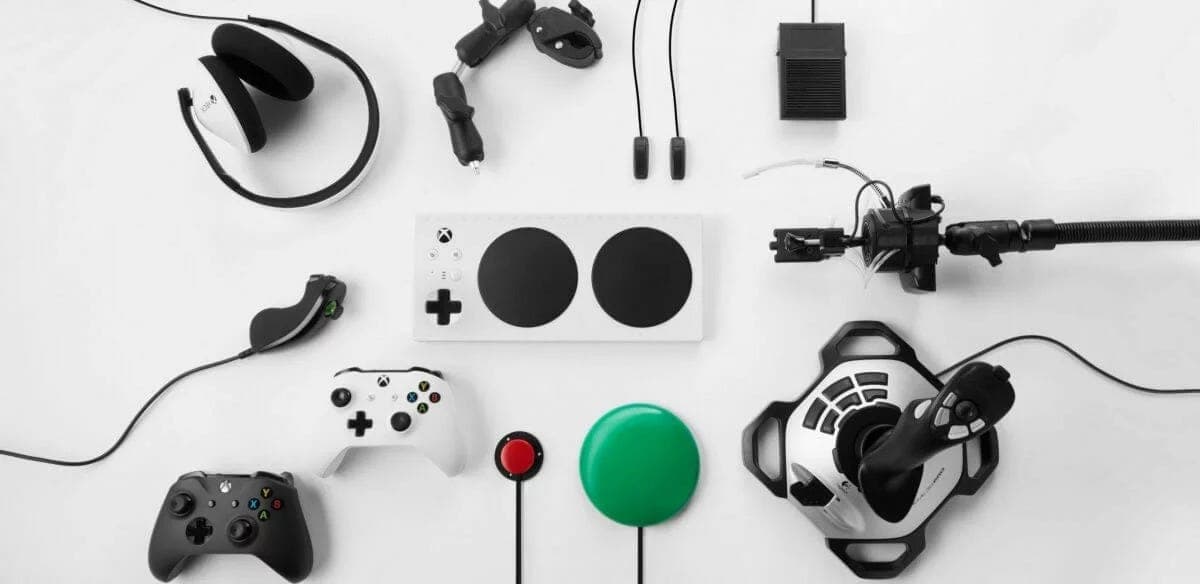
And the Xbox Adaptive Controller (XAC), launched in September 2018. The XAC is a type of assistive tech called a switch interface, allowing the connection of accessibility switches - simple on/off input devices used by people who cannot operate standard controllers. While the tech itself was not new, never before had it been so high quality, or available so cheaply. And most importantly the fact that it was a major player in the games industry putting their money where their mouth was sent a powerful message. Particularly with the ad for it that went out for Superbowl, seen by over 100 million people at the event and many more online afterwards. A powerful message had been sent.
That brings us to the 2020s. Tremendous progress is still being made, particularly at the AAA end of development with games like Forza Horizon 5 and The Last Of Us 2.
But we’re still a very long way from where we need to be. We’re still not yet at a stage of any game managing to nail all of the basics, let alone any gamer being able to pick up any game and having a reasonable expectation that they’ll be able to play it.
“To me, accessibility does not exist in contradistinction to anyone's creative vision, but rather it is an essential aspect of any experience you wish to be enjoyed by the greatest number of humans as possible.”
Cory Barlog. Video Game Designer.
Accessibility in video games is a hot topic at the moment, and rightly so. Crucially, it aims to swing the door open for gamers who need a little extra support to enjoy titles to their full potential.
Video games are an essential part of modern society. From edutainment games that teach valuable lessons from an early age to professional eSports leagues, the sector now has millions of fans from virtually every demographic imaginable. Gaming brings people of different ages, genders, financial and cultural backgrounds together. Disabled and impaired gamers should not feel excluded from that community.
The industry is already worth $138bn and counting. However, the statistics on disability prevalence show the potential to grow the community and industry value further. Currently far too many players are excluded by the way gaming software and hardware is designed.
An estimated 13.7 million people in the UK alone are living with some form of disability.
Over 1.2 million Brits have hearing loss of over 65db while over 50 million Americans have at least mild hearing loss.
It is also suggested that 15% of children and teenagers have some level of hearing loss too.
Around 2.2 billion people worldwide experience some form of visual impairment or blindness.
Over 350,000 people in the UK are officially registered blind or severely visually impaired.
Up to 10% of people, including 2% of severely impacted individuals, experience dyspraxia.
Over one in four, and one in three for rural areas, adults have arthritis. Hand-related issues like osteoarthritis are very common.
Up to one in three disabled gamers are forced to quit gaming as a direct result of the accessibility issues games present
Accessibility in video games allows people across all of these demographics, and more,to embrace all that modern gaming has to offer. As well as the aforementioned educational aspects and competitive nature of eSports, video games are the ultimate recreational activity.
From immersing yourself in a single-player story arc to enjoying team games with friends (locally or from around the world) via internet gaming, incredible fun awaits. Games often become hot talking points among friendship groups while many titles form key parts of bigger franchises.
In short: gaming is a key ingredient in the recipe for social interactions, while it can also support personal growth. Even when it’s just a way to relax at the end of a tough day, the value of gaming is huge. All players, including those with health issues and physical limitations, should be a part of that community.
For developers and designers, utilising the latest tech capabilities to provide accessible gaming also opens up their titles to a far larger audience without causing any downsides for existing audiences and able-bodied players. Offering players the access to reaction, socialising and cultural participation that games are so well placed to give.
The way games are designed can severely hinder a gamer’s ability to interact with the game, complete tasks or follow the story. Feedback from gamers has often been the best barometer for understanding how a lack of accessibility features can impact a gamer’s enjoyment. Anecdotally, the key features that tend to crop up include:
Text size. As Sommer Panage of Apple states: “Supporting Large Text isn’t a feature. It’s a fundamental part of functionality. Some users only use their devices with Large Text! That means if you don’t support it, they can’t use it!
Button remapping, allowing people to move functions to areas of an input device that are easier for them to use. .
Subtitling, particularly the way subtitles are presented - size, contrast, characters per line, speaker indication and so on.
Intensity of effects and camerawork, which can result in discomfort, fatigue, pain, nausea, even epileptic seizures which in turn can result in serious injury or worse.
Use of colour difference alone to communicate or differentiate information, which can lock out the many people who have some form of colour vision deficiency.
Xander Ashwell of Rare declares: “I want to make experiences that are enjoyable for everyone.” which echoes the thoughts of most leaders in the field. Whether a lack of accessibility features stops a gamer from enjoying a game to the max or prevents them from playing it altogether, it is an issue that needs addressing.
After a slow start in the industry’s early decades, accessibility in video games has come a long way in a short space of time.
Here are five examples of games that have recently made great strides.
TLOU2 over 60 accessibility features, across the full disability spectrum. Most notably TLOU2 was the first AAA game designed from the ground up to be fully accessible to gamers who are completely blind. More info: https://www.playstation.com/en-gb/games/the-last-of-us-part-ii/accessibility/
The latest edition of Forza goes in heavy on assists, alongside a wide range of other considerations. These even includes provision of BSL and ASL sign language interpreters for the game’s cutscenes. More info: https://news.xbox.com/en-us/2021/11/04/gaming-for-everyone-the-accessibility-features-of-forza-horizon-5/
Sequence Storm is a game at the very top of the industry for accessibility, with a deep level of customisation available, and options to allow the game to be played by people who are completely blind. The game was developed by a solo indie developer, a clear illustration that success in accessibility is not dependent on large production budgets More info: https://www.youtube.com/watch?v=EytoKIMXtCs
Another indie accessibility superstar, Eagle Island builds open Celeste to offer a wide range of visual and motor considerations, from enemy outlining and background dimming to game speed and simplified controls. More info: https://www.youtube.com/watch?v=sTyPhVAvspI
The latest Ratchet & Clank builds upon the great progress made in Insomniac’s early games, with a very broad range of considerations that includes configurable game speed and highly customisable high contrast modes for players with low vision. More info: https://www.sie.com/en/blog/inside-the-accessibility-features-of-ratchet-clank-rift-apart/
The great thing about the accessible gaming community right now is that it is embraced by AAA companies, indie designers, the media and commentators alike. Moreover, the growing demand from consumers means that most people in the industry must take note.
Still, some figureheads and organisations have a far bigger impact than others. Here are some of the key names that all interested parties need to know.
SpecialEffect is a UK charity that launched in 2007, known for a host of initiatives including the One Special Day event. The company promotes inclusion through gaming by supporting gamers directly, while also working with developers to create accessible gaming features like the EyeMine software, which enables players to control games exclusively with their eyes.
The charity’s research and development teams look to promote accessibility by providing free software resources, while the company continues to support gamers with a range of disabilities. Their work extends to gamers around the globe and they have directly changed the lives of thousands, while indirectly helping many more through their support of the industry as a whole.
Founded in 2004, Able Gamers is an American non profit organisation that combats social isolation through play. It works with and is sponsored by the likes of Playstation, Hasbro, Dell, and Ubisoft to foster an inclusive community. This is facilitated by the development of new equipment and accessories, as well as consultations on in-game features that can be used to promote accessibility.
Able Gamers uses peer counselling, peer researching, user researching and professional development to make a better gaming environment for gamers with a range of disabilities. This includes individuals with restricted hearing, sight, cognitive development, and mobility. As a bridge between gamers and developers, the company’s work has been exceptional.
Founded in 2003, the International Game Developers Association’s Game Accessibility Special Interest Group is a group of volunteers within the International Game Developers Association with a passion for game accessibility. The SIG provides a place for like-minded developers, academics and advocates to come together, both online through Discord and Facebook, and in person through events like the GDC round tables and GAconf (game accessibility conference).
The SIG voluteers also engage in advocacy work and develop and publish resources, from collections of articles and papers through to guidelines for platforms and studios, from advice on speaking to help understanding and navigating the CVAA legislation.
An accessibility specialist with over 15 years of game accessibility experience, working to raise the bar on accessibility in gaming through advocacy and consulting. Before accessibility his background was in design and UX, making him one of the most experienced names in the game. He says that he got into accessibility after seeing how simple alterations to games could help people participate in society.
The Xbox Studios Accessibility Lead & GAConf Co-Director is dedicated to helping gamers overcome barriers through a range of innovative and ingenious solutions. She oversees the company’s key accessibility features from conception to completion, while also conceptualising strategies and developing tools for a superior and accessible gaming experience for all. With Microsoft often leading the way, her presence is key.
A disabled gamer who has been a key face in raising the general awareness of challenges faced by gamers with a disability. His campaigns with others in the community have raised over $1m to aid the development of new opportunities for gamers. The American is a key spokesman and content creator who has appeared on many talk shows, discussions and podcasts on the topic.
The Blind Gamer is one of the most respected content creators in the field of accessibility gaming and regularly meets with developers to consult them on where the industry can move next. As well as being a blind registered gamer himself, he regularly discusses issues with other members of the disabled gamers community to pass their feedback onto the appropriate people.
The Canadian disabled digital accessibility specialist is a wheelchair user herself and has cemented her place as one of the top gaming streamers on the planet. She regularly uses her own experiences as well as insights gained from others to advise developers on how to help disabled gamers enjoy titles to the same level as able-bodied gamers. Similarly, her content is relatable to other disabled gamers and boosts awareness.
These are just a few examples, for many more great people have a look through these people’s timelines, see who they’re retweeting.
“The progress year on year is exponential, and we're now seeing the magic three elements of cultural change slotting nicely into place; bottom-up pressure from developers who care and know what to implement, top-down pressure from management who care and want to empower and enable their staff to do it, and external pressure too, with gamers feeling comfortable to keep the feedback coming in.”
Ian Hamilton, Accessibility Specialist.
In the past decade, we have seen clear indications that the industry is committed to improving how many gamers are able to access their games. Tech advancements, an increased understanding of conditions, passionate industry leaders, and a sector’s desire to stop missing out on a huge part of its potential customer base are just some of the contributing factors behind this.
Following the success of previous games, not least The Last Of Us Part II, it can only be assumed that game developers will add accessible features as standard in future titles. If they don’t, you can be sure that the gamer community will soon start to demand it.
As Chris Cooke of Everyone-Games explains: “What percentage of gamers play a game on ultra-hardcore mode? The disabled are easily a larger customer base, but I don't see a mode for them as often in the settings!”
Consumer expectations are shifting. Considerations that allow more people to enjoy games without losing the fundamentals of the game’s narrative and experience will be expected more and more in the coming years. When combined with more gaming setups and accessories for people with mobility or audio/visual limitations, the future looks bright. Now that the progress has reached top gear, do not expect it to decelerate any time soon.
Video games were a little slow to embrace accessibility features for disabled gamers.
However, things started to change towards the end of the 20th century with the arrival of the 3D era (fifth generation consoles) and continued to progress over the next 15 years, before bursting into hyperdrive throughout the 2010s and into the current decade.
Gaming is for everyone, regardless of colour, creed, gender, religious belief or disability. Thanks to the continued growth of accessibility features, this is beginning to happen, but more needs to be done. We The Players is united with other websites such as Taming Gaming and Accessible Games Database to provide information that can assist users with disabilities to find games that they can enjoy. Over the coming months, you’ll begin to see accessibility data appearing for games with additional features added to the website to make this easy to find.
The Game Accessibility Conference http://www.gaconf.com
The IGDA Accessibility SIG’s collection of guidelines, videos, articles, and tools https://igda-gasig.org/how/for-developers-researchers/
No comments yet. Be the first.