-
Average rating
14
Games
0
Votes cast
Heartbeat
Shipped Titles
Games (14)
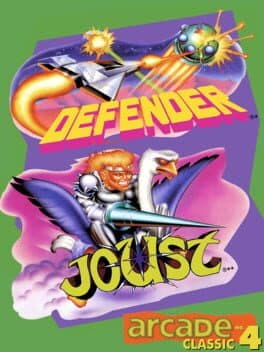
Arcade Classic No. 4: Defender / Joust
Williams Electronics1995
A compilation and port of the classic arcade titles. The games can also be played on the Super Game Boy Peripheral and has altered graphics from the original versions. It does not feature the ability to use the Link Cable, but does have an option for two friends to take turns for each game.
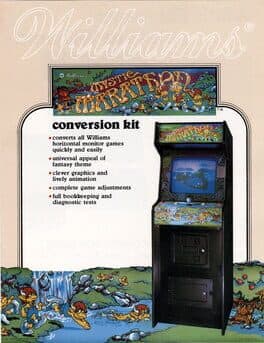
Mystic Marathon
Williams Electronics1984
The game is a left-to-right footrace between the player-controlled creature and six controlled by the computer. Each island contains multiple paths, and the creatures have to swim the water between the islands, which is slower than running. Many obstacles slow the creatures down, including apple-throwing trees, lightning, sea monsters, giant clams, and sinkholes. There are also ways to move forward quickly, such as a hand that throws a character and caves that warp the creature to the exit. In addition to a joystick for movement, there is a jump button. The goal is to finish in the top three to progress to the next race.
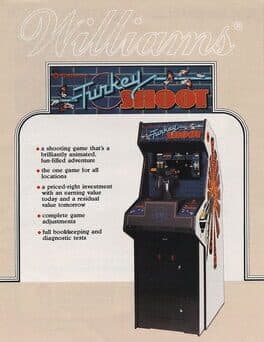
Turkey Shoot
Midway1984
Shoot 'em up
Roller Aces
Kaneko1984
Fighting Roller / Roller Aces is all about holding forward to jet down the racetrack and avoiding all the dang obstacles you can. All tracks are littered with all sorts of crap: Speed bumps, rocks, cylindrical columns, and gaping pits.
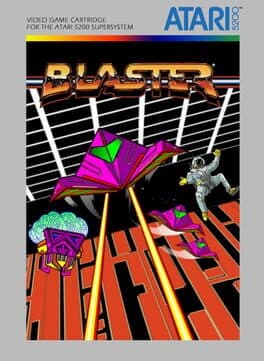
Blaster
1983
Blaster developed by Vid Kidz for Williams was released for the arcades and is quite obscure. What is interesting however is that the Atari 5200 version that was not released was actually made before the arcade game. An unofficial sequel to Robotron 2084 (As it takes place in 2085) Blaster is a 3d style shooter with impressive graphics for the time. In it the player takes the view from a spaceship cockpit so moving in the different directions shifts the entire screen. There are four levels you will play through avoiding obstacles, saving humans, and defeating alien enemies. Upon beating the four levels the game loops but will be more difficult.
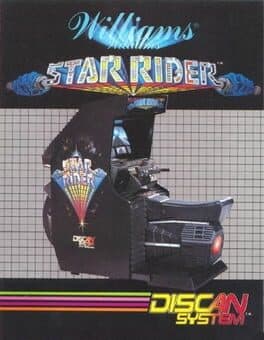
Star Rider
Williams Electronics1983
Star Rider is a futuristic motorcycle racing game that used pre-rendered 3D graphics stored on LaserDisc.
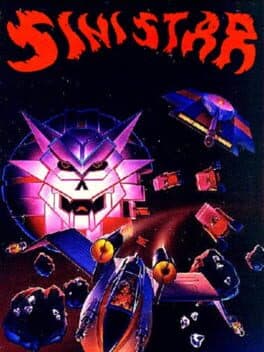
Sinistar
Williams Electronics1983
The player pilots a lone spacecraft, and must create "Sinibombs" by shooting at drifting planetoids and catching the crystals that are thereby released. Sinibombs are needed to defeat the game boss, Sinistar, an animated spacecraft with a demonic skull face. Sinistar does not exist at the start of the game, and is continuously under construction by enemy worker ships. Though time is crucial, attempting to mine too quickly will destroy a planetoid without releasing any crystals. Enemy worker ships are also gathering crystals (often stealing them from the player) which they use to construct the Sinistar. Enemy warrior ships can directly attack the player's ship. The player is given a head-start before the enemy ships have enough crystals to begin construction. Game ends when the player's ships are all destroyed. Once the Sinistar is completely formed, a digitized voice makes various threatening pronouncements, including "Beware, I live!," "I hunger, coward!," "I am Sinistar!," "Run! Run! Run!," "Beware, coward!", "I hunger!," "Run, coward!," and a loud roaring sound. The Sinistar has no weapon attacks, but if it contacts the player's ship while it darts about the playfield, the player's ship will be "eaten" and destroyed. A total of 13 Sinibombs are required to destroy a fully built Sinistar, although an incomplete Sinistar can be damaged to slow construction. Each short-range Sinibomb automatically targets the Sinistar when fired, but can be intercepted by a collision with an enemy ship, enemy fire, or a planetoid. The player moves from one zone to the next each time he defeats the Sinistar. A sequence of four zones repeats continuously after the first zone. Each is named for the most numerous feature of that zone: Worker Zone, Warrior Zone, Planetoid Zone, and Void Zone (the Void Zone is especially difficult because it has very few planetoids). Beginning with the first Worker Zone, a completed but damaged Sinistar can be repaired/rebuilt by the enemy ships by gathering more crystals, extending its "lifespan" if the player is unable to kill it quickly.
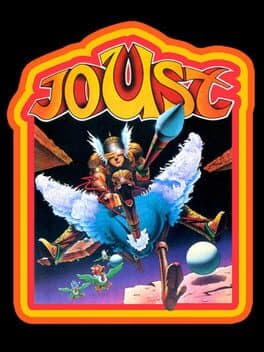
Joust
Williams Electronics1982
Joust is an arcade game developed by Williams Electronics and released in 1982. It is a platform game that features two-dimensional (2D) graphics. The player uses a button and joystick to control a knight riding a flying ostrich. The object is to progress through levels by defeating groups of enemy knights riding buzzards.

Bubbles
Williams Electronics1982
Can you and a duck bath toy reach the peak of evolution? In this physics-based combination game featuring cute little sea creatures, merge bubbles together to create new life forms!
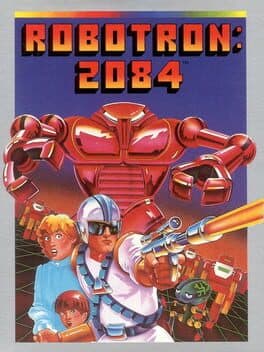
Robotron: 2084
Vid Kidz1982
In 2084, man creates a species of super-advanced cyborgs known as Robotrons. Recognizing the imperfect nature of their creators, the Robotrons conclude that the inefficient human race must be exterminated. In Robotron: 2084, only you and a single family of clones remain. If mankind is to survive, you must destroy the Grunts, Brains, Enforcers, and Tanks - but avoid the indestructible Hulks at all cost. Can you withstand wave after wave of android invasion and rescue Mommy, Daddy, and Mikey... before it's too late?
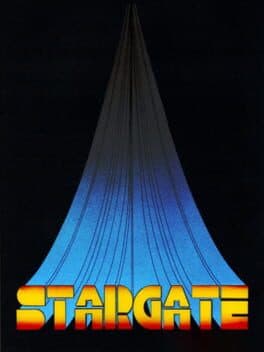
Stargate
Vid Kidz1981
Arcade shooter where you protect humans from being captured by aliens. Created by Eugene Jarvis and Larry DeMar, it is a sequel to Defender which was released earlier in the year. Some home ports of Stargate were renamed to Defender II for legal reasons.
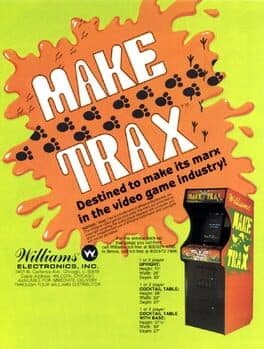
Make Trax
Alpha Denshi1981
Player controls a paintbrush to paint paths within a maze. The player is harassed by two fish which can be temporarily destroyed by running them over with a one of two paint rollers located near the maze center. A critter occasionally emerges to leave footprints on painted areas which must then be repainted.
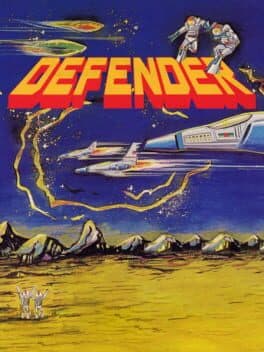
Defender
1981
Defender is an arcade video game developed released by Williams Electronics in 1980. A shooting game featuring two-dimensional (2D) graphics, the game is set on a fictional planet where the player must defeat waves of invading aliens while protecting astronauts. Development was led by Eugene Jarvis, a pinball programmer at Williams; Defender was Jarvis's first video game project, and drew inspiration from Space Invaders and Asteroids. Williams planned to display the game at the Amusement & Music Operators Association (AMOA) trade show, though development delays resulted in the team working on the game up until the show started. Defender was commercially successful, selling over 55,000 units to become the company's best selling arcade game. Praise among critics focused on the game's audio-visuals and gameplay. It is frequently listed as one of Jarvis's best contributions to the video game industry, as well as one of the most difficult video games. Defender was ported to numerous platforms, inspired the development of other games, and was followed by sequels and many imitations.
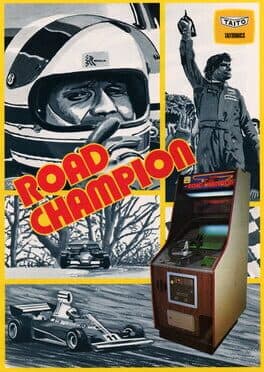
Road Champion
Taito1977
An arcade racing game from Taito.