-
Average rating
48
Games
0
Votes cast
Heartbeat
Shipped Titles
Games (48)
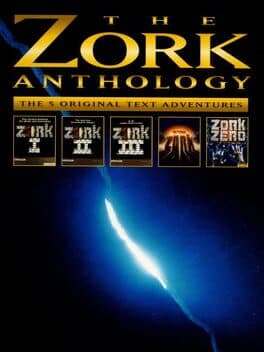
Zork Anthology
Infocom2017
Once you step through the door to Zork, you leave the world of arcade games and trite fantasies behind and enter the dimension of your imagination.
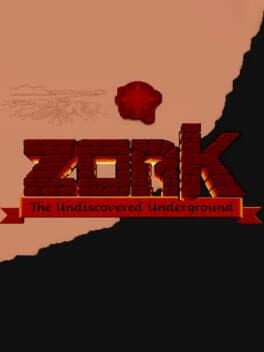
Zork: The Undiscovered Underground
Infocom1997
The purpose of the game is to explore and emerge successfully from the Undiscovered Underground. The player begins only with a low-quality Lantern and plastic imitation sword, a parody of the starting items from Zorks I, II and III. Upon entering the Undiscovered Underground, the adventurer is trapped by a freak avalanche. The only way to escape is to release the mutant Rat Ants (an echo from Starcross) and to direct them to the avalanche, which they dispatch in a manner reminiscent of Aesop's Fables. The player must demask the Grue vendor to gain the four candy bars and place the relevant objects in the Mud Forum on the appropriate corresponding floor symbols. This unleashes a mutant chase reminiscent of Planetfall where the adventurer stays one step ahead of the Rat Ants because of the shrewdly placed candy bars. However, the escape comes at the cost of unleashing a Rat Ant epidemic onto the empire and forces the adventurer to flee from the wrath of the Grand Inquisitor.
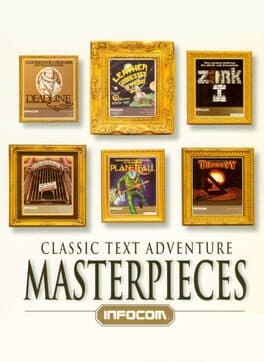
Infocom Classic Text Adventure Masterpieces
Infocom1996
A collection of over 30 of Infocom's greatest text adventure games
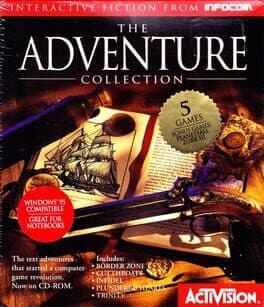
The Adventure Collection
Infocom1995
"Welcome to the world of interactive fiction. The story is yours to unravel. Every inquiry elicits response. Your every command evokes an action... or perhaps inaction... which may intrigue you further. It's a world of suspense requiring word for word interpretation of a puzzling story only your imagination can solve. A world where curiosity could be the only thing to keep you alive. And knowing could 'literally' kill you." This is a collection of several Infocom interactive fiction games, including: Border Zone, Cutthroats, Infidel, Planetfall, Plundered Hearts, Trinity, and Zork III.
Return to Zork
Infocom1993
Return to Zork: A mesmerizing interactive adventure of danger, intrigue and cunning.
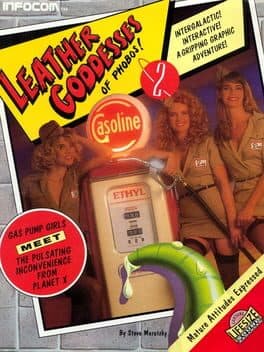
Leather Goddesses of Phobos 2: Gas Pump Girls Meet the Pulsating Inconvenience from Planet X!
Infocom1992
Leather Goddesses of Phobos! 2: Gas Pump Girls Meet the Pulsating Inconvenience from Planet X is a graphic adventure game written by Steve Meretzky and published by Activision in 1992 under the Infocom label. As 1 of 3 different player characters (male, female or alien!) you unravel puzzles to thwart the Pulsating Inconvenience from Planet X to save Earth in the year 1956!
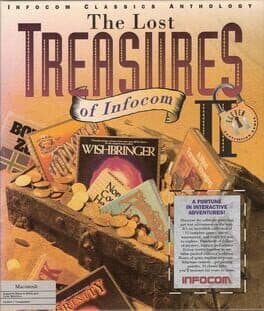
The Lost Treasures of Infocom II
Infocom1992
The Lost Treasures of Infocom II is a collection of text adventure games from interactive fiction pioneer Infocom, published by Activision in 1992. It was available for MS-DOS and Apple Macintosh, and also as a cross-platform expanded CD-ROM version. This follow-up compilation was released following the commercial success of their previous collection, The Lost Treasures of Infocom, which contained 20 of Infocom's most popular games. The 11 games included in all versions are: A Mind Forever Voyaging Border Zone Bureaucracy Cutthroats Hollywood Hijinx Nord and Bert Couldn't Make Head or Tail of It Plundered Hearts Seastalker Sherlock: The Riddle of the Crown Jewels Trinity Wishbringer The CD-ROM version included three additional games: Arthur: The Quest for Excalibur James Clavell's Shōgun Journey The package contains an instruction manual reprinting all of the games' manuals, as well as a few pack-in items from Sherlock and Trinity. However, it leaves out the InvisiClues hint booklets from the original games, replacing them instead with a card advertising a pay-per-minute hint line. The package also includes a coupon for the game Leather Goddesses of Phobos, which had not been included in either of the two collections. The CD-ROM version includes an instruction manual with instructions for all three games, the Book of Hours pack-in from Arthur, and the maps from Journey and Shōgun.
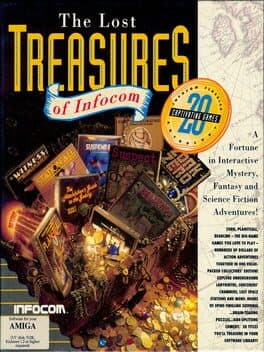
The Lost Treasures of Infocom
Infocom1991
The Lost Treasures of Infocom is a collection of 20 computer games from interactive fiction pioneer Infocom, released in 1991. It was available in MS-DOS, Apple Macintosh, Amiga, and Apple IIGS versions, as well as a cross-platform CD-ROM version, followed by a re-release on the Apple Computer iOS platform in 2012. Infocom was closed in 1989 by its then-parent company Activision. Still holding the copyright to nearly all the past Infocom titles, Activision bundled 20 of the most popular into this package. The games included are: Zork I Zork II Zork III Beyond Zork Zork Zero Enchanter Sorcerer Spellbreaker Deadline The Witness Suspect The Lurking Horror Ballyhoo Infidel Moonmist Starcross Suspended Planetfall Stationfall The Hitchhiker's Guide to the Galaxy The package contains all the instructions (bound in one volume) and maps for each game as well as all the InvisiClues, printed normally instead of using "invisible" ink. The package also features a launch menu which lets the user select which one of the 20 games they wish to play. An additional bonus was the updated version of Hitchhiker's Guide. The game was repackaged using a later version of the Z-machine than the original, and now featured a built-in hint system. Some significant omissions from the package were the "feelies" for which Infocom had become known. The package merely contained photocopies or pictures of these items, such as the sunglasses from Hitchhiker's Guide and the Stellar Patrol ID card from Planetfall.
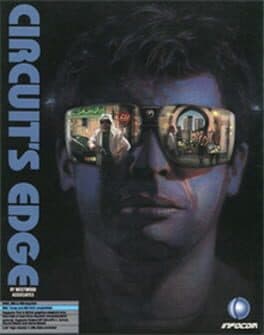
Circut's Edge
Westwood Studios1990
Circut's Edge is a 1990 interactive roleplaying game where you play as detective Marîd Audran in a city sector called "The Budayeen", that is set in the Middle East and based on New Orleans.
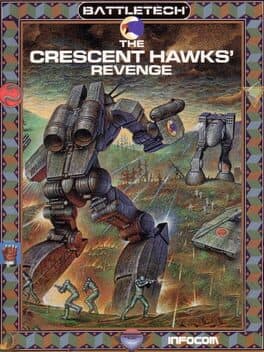
BattleTech: The Crescent Hawk's Revenge
Westwood Studios1990
BattleTech: The Crescent Hawks' Revenge is a real-time tactics game based in the FASA BattleTech universe. It is a direct sequel to BattleTech: The Crescent Hawk's Inception, though the gameplay is considerably different from that of the first title, which was primarily an adventure/role-playing game.
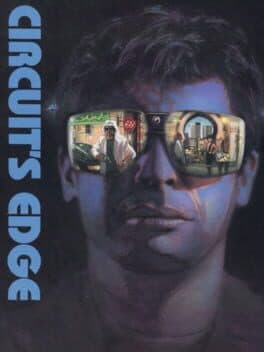
Circuit's Edge
Westwood Associates1990
Circuit's Edge is a computer game developed by Westwood Associates and released by Infocom in 1989. It is based on George Alec Effinger's 1987 novel When Gravity Fails. The game is a hybrid interactive fiction/role-playing game; it contains a window of text, a graphic window for depiction of the player's current location, and various menus and mini-windows for character statistics and other game functions.
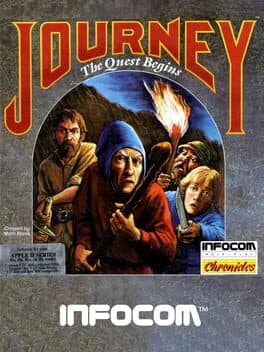
Journey: The Quest Begins
Infocom1989
A text and static graphics adventure by Infocom.
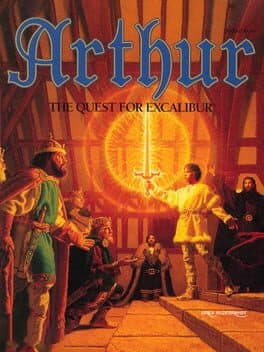
Arthur: The Quest for Excalibur
Infocom1989
"Whoso pulleth out this sword of this stone is rightwise king born of all England" In the days before Camelot, when magic and evil rule England, a sword sheathed in stone appears in a quiet churchyard. Engraved upon it are the words which form your destiny. For you are Arthur. the son and true heir to the High King, Uther Pendragon. But there is more to asserting your claim than wresting free the sword. The sword in the stone disappears - stolen by the evil King Lot. To win it back, you must develop the kingly qualities of wisdom, chivalry and experience, qualities that will also prove you worthy of the throne. And you must do it all within three days, or Lot will usurp your legacy. You are assisted by Merlin the Enchanter, who grants you the power to transform yourself into a variety of animals. Now you can explore the kingdom as no one has before: from the sky, from rivers and lakes, from on- and under- the earth. How you use this power, and how you solve the myriad puzzles that confront you, will determine your success in your quest. Arthur: Quest for Excalibur adds an exciting new dimension to the timeless Arthurian tale while preserving all of its original richness and grandeur. Captivating color graphics combine with the richness of Infocom's storytelling to bring you unforgettable entertainment. Now prepare to claim your birthright as king born of all England. It's your chance to live the legend.
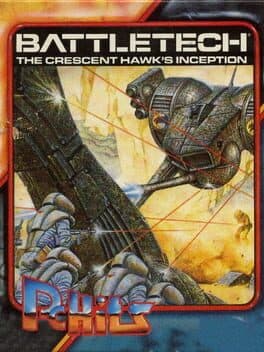
BattleTech: The Crescent Hawk's Inception
Westwood Associates1988
20 Lethal tons of massive fighting power are primed for battle and your in control. The 31st century is a desperate time. Five Successor States are hopelessly locked in mortal struggle for power. In this era of endless war, the powerful, death-dealing BattleMechs are valued higher than human life. You are 18-year-old Jason Youngblood, and fate has given you a terrible gauntlet to run. Abruptly wrenched from the intense drilling of 'Mech warrior training, you are plunged into real battle with deadly Kurita warriors. Savage experience is now your unforgiving teacher, and the very survival of The Lyran Commonwealth demands you learn the ruthless precision of battle strategy quickly. Can you, the son of legendary "Mech warrior Jeremiah Youngblood, steel yourself for the greatest challenge of your life? Authentic Battletech combat is yours to command. The master storytellers of Infocom have joined forces with FASA, the creators of Battletech and the computer wizards of Westwood Associates to bring you an unparalleled adventure. You're in command: you choose your weapons and your target for each member of your fighting unit. Experience the thrill of battle as you move your "Mechs across the far-reaching terrain of Chara IV.
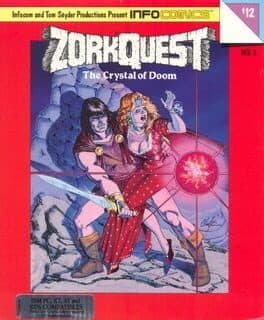
ZorkQuest: The Crystal of Doom
Tom Snyder Productions1988
An infocomics game produced by Infocom in the Zork Universe. A follow-up to ZorkQuest: Assault on Egreth Castle.
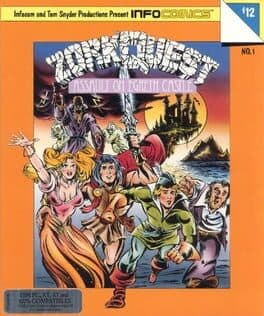
ZorkQuest: Assault on Egreth Castle
Tom Snyder Productions1988
Interactive Comic by Infocom in their popular Zork universe.
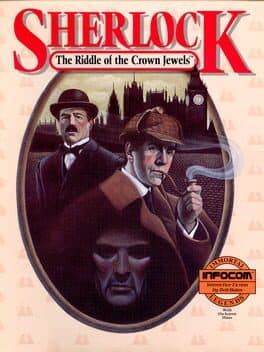
Sherlock: The Riddle of the Crown Jewels
Challenge, Inc.1988
Sherlock: The Riddle of the Crown Jewels is an interactive fiction computer game designed by Bob Bates and published by Infocom in 1987. Like most titles Infocom produced, the use of ZIL made it possible to release the game simultaneously for many popular computer platforms, including the Apple II, IBM PC, Atari ST, and Commodore 64. Sherlock is based on the legendary fictional detective Sherlock Holmes, created by Sir Arthur Conan Doyle. It is Infocom's thirty-first game and is the first of two Infocom games developed by Challenge, Inc. using Infocom's development tools. The year is 1887, and all of England is gearing up for the celebration of Queen Victoria's Golden Jubilee, marking her 50th year as monarch. London, naturally, is especially frenzied. Reading the paper one morning, Sherlock Holmes seizes upon one seemingly unimportant notice: the Tower of London has been closed for "reasons of security." The great detective is unsurprised when, moments later, he is asked to investigate the theft of the Crown Jewels. The clues left behind, however, positively reek of a carefully laid trap; Sherlock decides that he must step aside and allow Dr. Watson to pursue the thief instead. But if the Jewels are not replaced within 48 hours, the British government will be forced to admit that their most prized possessions were stolen and suffer worldwide humiliation. The player fills the role of Watson, travelling around London in Hansom cabs while attempting to recover the Crown Jewels while encountering many characters from Doyle's stories such as Mrs. Hudson, Mycroft Holmes, and Wiggins of the Baker Street Irregulars.
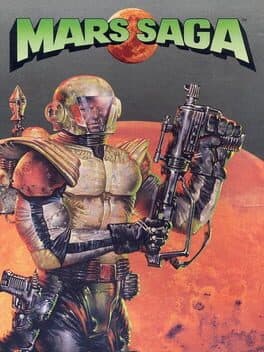
Mars Saga
Westwood Associates1988
Mars Saga is a role-playing video game developed by Westwood Associates and published by Electronic Arts for the Commodore Commodore 64 in 1988. Following a legal battle against Electronic Arts for rights on the franchise, Westwood turned to Infocom to publish the Apple II and MS-DOS ports.
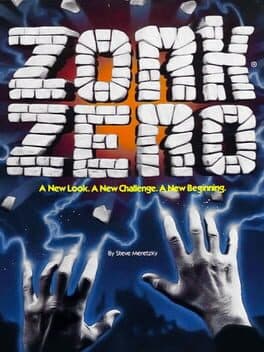
Zork Zero: The Revenge of Megaboz
Infocom1988
You're on the threshold of a whole new experience, for ahead of you is the extraordinary anthology of the Great Underground Empire. Once you step through the door to Zork, you leave the world of arcade games and trite fantasies behind and enter the dimension of your imagination. Every plot, every puzzle, every personality has been honed and perfected to make your experience uniquely realistic and involving. The Zork saga is text adventuring at its finest. Welcome to the underground. Your greatest challenge lies ahead and downwards.

Border Zone
Infocom1987
Border Zone is a text adventure game in which the player controls three different protagonists throughout three chapters
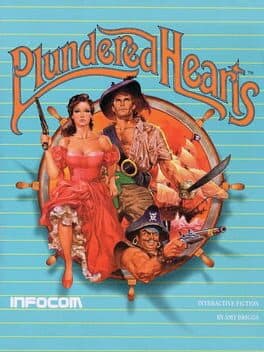
Plundered Hearts
Infocom1987
Hearing your father has taken ill, you rush to his aid in this 17th century island romance tale.

Bureaucracy
Infocom1987
Bureaucracy is an interactive fiction computer game released by Infocom in 1987, scripted by popular comic science fiction author Douglas Adams. The player is challenged to confront a long and complicated series of bureaucratic hurdles resulting from a recent change of address. Mail isn't being delivered, bank accounts are inaccessible, and nothing is as it should be. The game includes a measure of simulated blood pressure which rises when "frustrating" events happen and lowers after a period of no annoying events. Once a certain blood pressure level is reached, the player suffers an aneurysm and the game ends. While undertaking the seemingly simple task of retrieving misdirected mail, the player encounters a number of bizarre characters, including an antisocial hacker, a paranoid weapons enthusiast, and a tribe of Zalagasan cannibals. At the same time, they must deal with impersonal corporations, counterintuitive airport logic, and a hungry llama.
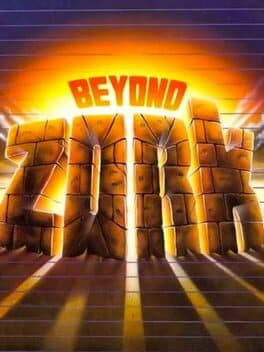
Beyond Zork: The Coconut of Quendor
Infocom1987
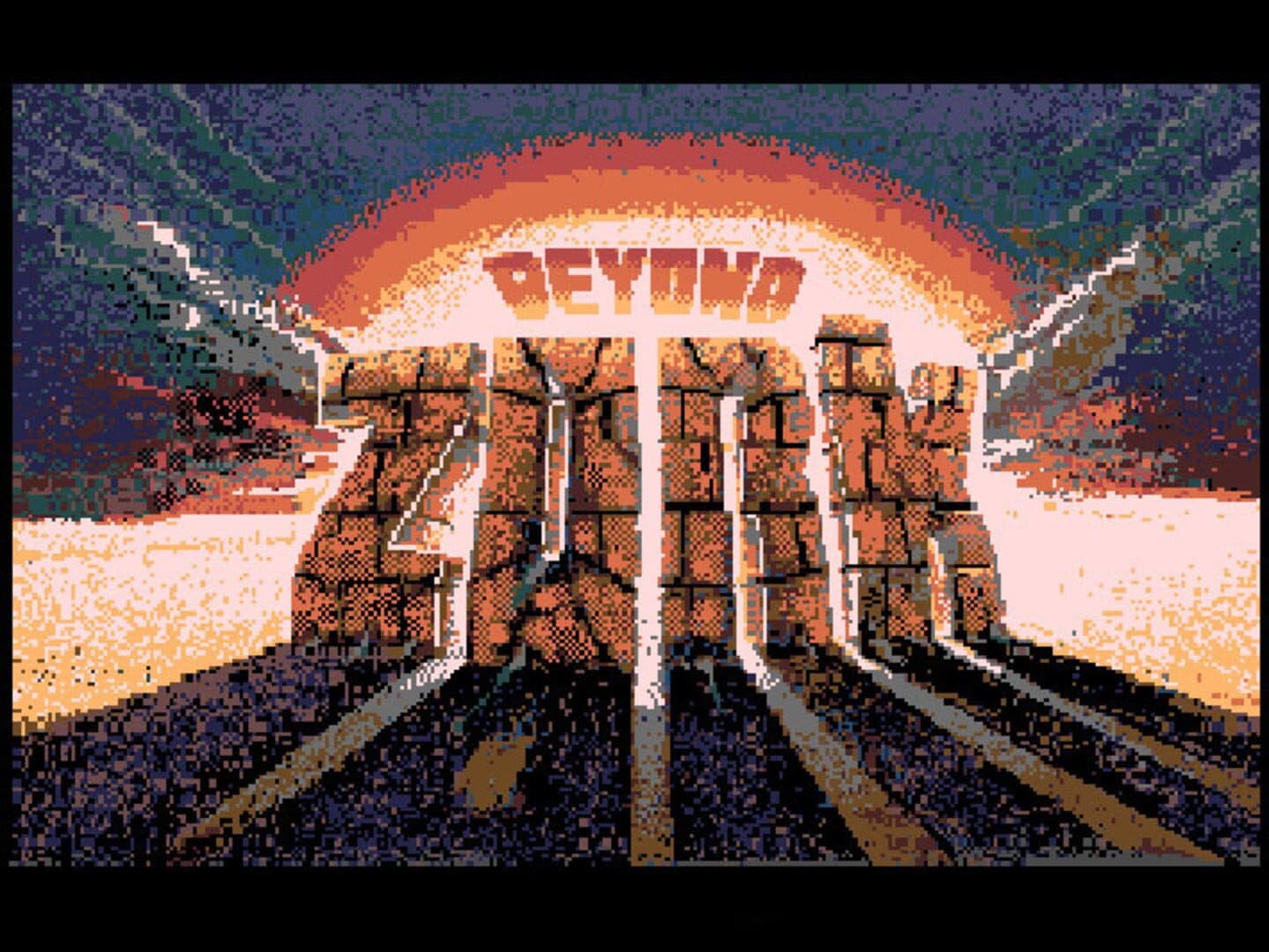
Beyond Zork: The Coconut of Quendor is an interactive fiction computer game written by Brian Moriarty and released by Infocom in 1987. It was one of the last games in Infocom's Zork series It signified a notable departure from the standard format of Infocom's earlier games which relied purely on text and puzzle-solving: among other features, Beyond Zork incorporated an on-screen map, the use of character statistics and levels, and RPG combat elements. The game, Infocom's twenty-ninth, was available on the Amiga (512kb), Apple (128kb), Atari ST, Commodore 128, and IBM (192kb), and the Macintosh (512kb) computers The player explores the Southlands of Quendor somewhat aimlessly at first. Soon, however, a task is bestowed by the Implementors, a group of godlike creatures jokingly based on Infocom's game designers. The Coconut of Quendor, an incredibly powerful artifact that embodies the whole of Magic, has fallen into the claws of an unspeakably foul beast: an Ur-grue. Rumoured to be the spirits of fallen Implementors, Ur-Grues can surround themselves in a sphere of darkness that only sunlight can pierce. The player must recover the Coconut from this monster's grasp or face the unthinkable consequences.
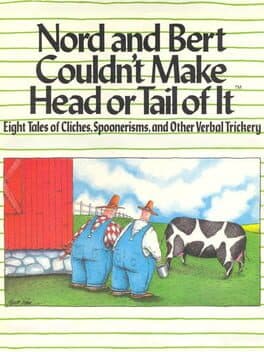
Nord and Bert Couldn't Make Head or Tail of It
Infocom1987
Nord and Bert Couldn't Make Head or Tail of It is a text adventure game revolving around puns and wordplays. Idioms and clichés have become real-world objects in the town of Punster, and the player has to sort them out in order to win. There are seven separate scenarios that can be played in any order, as well as the final one that can be accessed only after having completed all seven. These scenarios are: - The Shopping Bizarre: Products in a grocery store have been replaced by nonsensical homonyms (such as "chocolate moose"), and the player has to revert them to their normal form. - Playing Jacks: Equipped with an item called "Jack of All Traits", the player has to construct words beginning with "Jack" to solve puzzles. - Buy the Farm: Clichéd expressions must be used in their literal meaning while exploring a farm. - Eat Your Words: More literal idioms used in a diner. - Act the Part: The protagonist is teleported into a 1950's-style sitcom, where he must perform visual gags. - Manor of Speaking: The protagonist explores a strange house in a more traditional humorous Infocom-style manner. - Shake a Tower: Letters in expressions have to be re-arranged to create humorous new meanings. - Meet the Mayor: The final chapter of the game, mixing elements of the others as the protagonist faces the mayor of Punster.
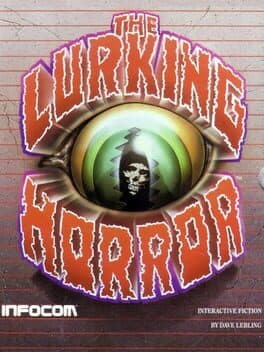
The Lurking Horror
Infocom1987
The Lurking Horror is an interactive fiction game released by Infocom in 1987. The game was written by Dave Lebling and inspired by the horror fiction writings of H. P. Lovecraft (including his Cthulhu Mythos). Like most of Infocom's games, it was released for several platforms simultaneously thanks to the Z-machine. The original release included versions for DOS, the Apple II, Atari ST, Atari 8-bit family and Commodore 64. Later, it was ported to the Amiga with the addition of sound effects, making it the first title with that feature. The effects would play at appropriate times in the game in an effort to intensify the horror atmosphere. This marked one of the few major additions to the Z-machine with the exception of graphics; traditionally, Infocom had eschewed such changes in favor of expanding the parser capacity and overall size of game files. It was Infocom's 26th game; Infocom rated it as "Standard" in terms of difficulty. Lurking Horror was the only horror game ever released by Infocom.
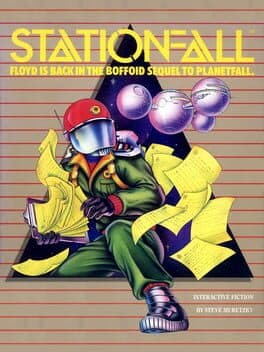
Stationfall
Infocom1987
Stationfall is an interactive fiction computer game written by Steve Meretzky and released by Infocom in 1987. Like the majority of Infocom's works, it was released simultaneously for several popular computer platforms of the time, such as the Commodore 64, Apple II, and PC. The game is a sequel to Planetfall, one of Infocom's most popular titles. It is Infocom's twenty-fifth game. Following the events on Resida in Planetfall, the player's character received a promotion from lowly Ensign Seventh Class to Lieutenant First Class. The life of an officer in the Stellar Patrol is no better than that of a humble enlistee, however. Five years after the thrills of saving an entire planet from destruction, the character is stuck in a boring desk job that demands piles of tedious paperwork instead of menial cleaning duties. A typically boring assignment comes in: accompany a spacetruck to a space station and pick up a load of "Request for Stellar Patrol Issue Regulation Black Form Binders Request Form Forms". To make things even more dull, spacetrucks are fully automated, so it will pilot itself once the proper coordinates are entered. But the task does authorize the use of a robot assistant, and coincidentally enough, Floyd, a beloved companion revived at the end of Planetfall, is one of the choices.
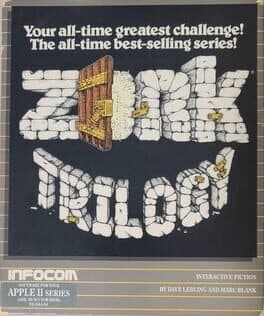
Zork Trilogy
1987
Zork Trilogy is a compilation of all three of Infocom's original Zork games: - Zork I: The Great Underground Empire - Zork II: The Wizard of Frobozz - Zork III: The Dungeon Master The package also includes an item that was featured as an in-game object in Zork games: the Zorkmid Coin.
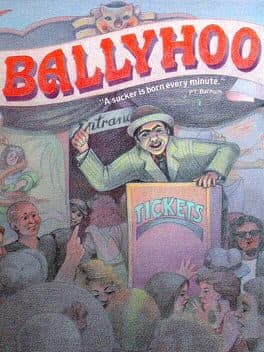
Ballyhoo
Infocom1986
Ballyhoo is an interactive fiction computer game designed by Jeff O'Neill and published by Infocom in 1985. It was released for ten different 8 and 16-bit platforms, including MS-DOS, Atari ST, and Commodore 64. It is Infocom's nineteenth game. With a circus-themed plot, the game's tagline was "Big-time suspense under the Big Top!" The player's character is bedazzled by the spectacle of the circus and the mystery of the performer's life. After attending a show of Tomas Munrab's "The Travelling Circus That Time Forgot", the player loiters near the tents instead of rushing through the exit. Maybe some clowns will practice a new act, or perhaps at least one of the trapeze artists will trip... Instead, the player overhears a strange conversation. The circus' owner has hired a drunken, inept detective to find his daughter Chelsea, who has been kidnapped. Munrab is convinced that it was an outside job; surely his loyal employees would never betray him like this! As the player begins to investigate the abduction, it soon becomes clear that the circus workers don't appreciate the intrusion. Their reactions range from indifference to hostility to attempted murder. In order to unravel the mystery, the player engages in a series of actions straight out of a circus fan's dream: dressing up as a clown, walking the high wire, and taming lions.

Moonmist
Infocom1986
Moonmist is an interactive fiction computer game written by Stu Galley and Jim Lawrence and published by Infocom in 1986. The game was released simultaneously for many platforms, including the IBM PC, Apple II, Amiga, Atari ST and Commodore 64. It is Infocom's twenty-second game. Galley and Lawrence previously wrote Seastalker for Infocom. The player's character is a young detective, asked by friend Tamara Lynd to investigate her new home of Tresyllian Castle in Cornwall, England. Tamara has recently become engaged to the castle's lord, Jack Tresyllian. She was very happy until she began seeing what appeared to be The White Lady, a ghost who has allegedly haunted the castle for centuries. As if seeing a ghost wasn't nerve-racking enough, she's also begun to fear for her life. Is Tamara's imagination just overly excited from living in a large old castle, or is someone really trying to kill her? And if her life is in danger, is it from a ghost or someone using it as a disguise?
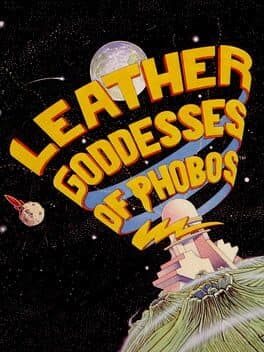
Leather Goddesses of Phobos
Infocom1986
The year is 1936, and suddenly the protagonist is abducted by the Leather Goddesses for the final testing in the plan which will enslave every man and woman on earth. These Leather Goddesses of Phobos are just finishing up their plans for the invasion of Earth. If the hero fails to escape and save humanity, the Leather Goddesses will turn the Earth into their pleasure dome. Leather Goddesses of Phobos is a text adventure with humorous overtones. The player uses standard commands in the text parser to observe his environment and pick up items. The game's 'naughtiness' level can be adjusted between Tame (G), Suggestive (PG), and Lewd (R).

Fooblitzky
Infocom1985
A board game style strategy game.
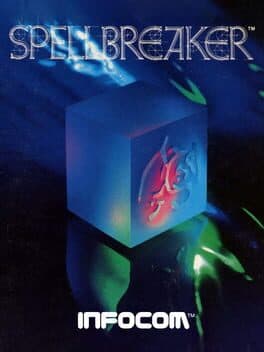
Spellbreaker
Infocom1985
Spellbreaker is an interactive fiction computer game written by Dave Lebling and released by Infocom in 1985, the third and final game in the "Enchanter Trilogy". Like most of Infocom's games, it was released for many of the time's popular computer platforms, such as the Commodore 64, Atari ST and Apple II. It is Infocom's eighteenth game. Over the course of events in the trilogy's earlier games from 956 to 957 GUE (Enchanter and Sorcerer), the player's character has progressed from a novice wizard possessing a few weak spells to the leader of the Circle of Enchanters. Now, in 966 GUE (ten years after the events of Enchanter), the very foundations of Magic itself seem to be failing, and the leaders of all the Guilds in the land have gathered to demand answers. In the midst of this impassioned meeting, the crowd is suddenly transformed into a group of toads and newts. Everyone present is affected except for the player and a shadowy figure who flees the hall.

A Mind Forever Voyaging
Infocom1985
A Mind Forever Voyaging (AMFV) is a 1985 interactive fiction game, intended as a polemical critique of Ronald Reagan's politics.

Wishbringer
Infocom1985
Wishbringer: The Magick Stone of Dreams is an interactive fiction computer game written by Brian Moriarty and published by Infocom in 1985. It was intended to be an easier game to solve than the typical Infocom release and provide a good introduction to interactive fiction for inexperienced players, and was very well received.
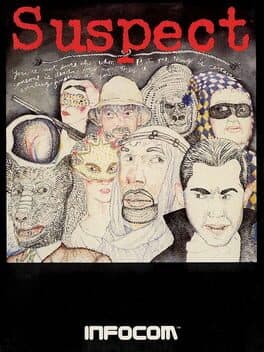
Suspect
Infocom1984
Suspect is an interactive fiction computer game designed by Dave Lebling and published by Infocom in 1984. It is the last murder mystery Infocom released, bringing an end to a popular genre of titles such as Deadline and The Witness. Like most Infocom titles, it was written in highly portable ZIL and made available for an array of popular computer platforms, including the Apple II, IBM PC, Atari ST, and Commodore 64. It is Infocom's fifteenth game.
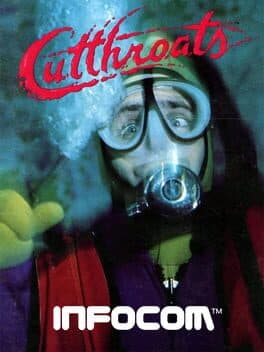
Cutthroats
Infocom1984
Cutthroats is an interactive fiction computer game written by Michael Berlyn and Jerry Wolper and was published by Infocom in 1984. Like the majority of Infocom's games, it was released for most of the popular computer platforms of the time, such as the Apple II, DOS, Commodore 64 and several other platforms. It is Infocom's thirteenth game.
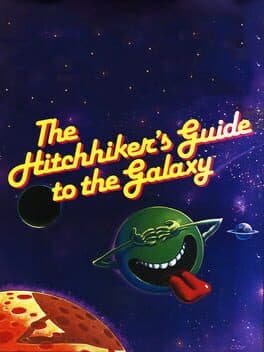
The Hitchhiker's Guide to the Galaxy
Infocom1984
The Hitchhiker’s Guide to the Galaxy is a classic Interactive Fiction game. Though divergent from the source material, the main characters, locations, and concepts are here. Unlike the book, death can come quickly if Arthur fails to observe his surroundings, collect inventory, talk to people, and consult the Guide. Don't panic!
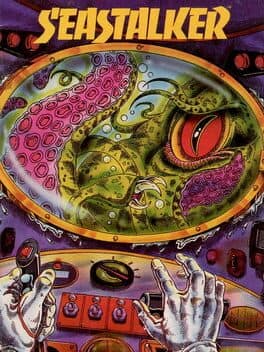
Seastalker
Infocom1984
Seastalker is an interactive fiction computer game designed by Stu Galley and Jim Lawrence and published by Infocom in 1984. Like most of Infocom's works, it was released simultaneously for several popular computer platforms of the time, such as the Commodore 64, Apple II, and IBM PC. The game was marketed as an introduction to interactive fiction for pre-teen players. It is Infocom's twelfth game. Galley and Lawrence later wrote Moonmist for Infocom. The player's character is a young inventor and marine scientist. A research facility called the Aquadome issues a call for help, indicating that the undersea structure is being attacked by a sea monster. With helpful assistant Tip, the player must navigate to the Aquadome in the new untested two-person submarine Scimitar and investigate the problem. But that isn't all... it looks like there may be a saboteur within the Aquadome as well.
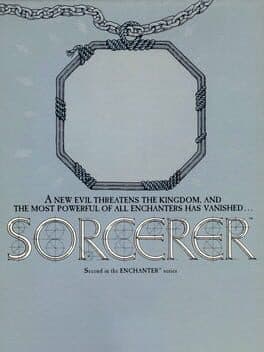
Sorcerer
Infocom1984
Many centuries ago, the Earth was ruled by Sorcerers and Wizards. They possessed mystical powers capable of both good and evil. The most respected influences in the land were from the good Sorcerers. This fact continually disturbed the evil Wizards, and they eventually decided to use their power to conquer the countryside and enslave its people. They devised a plan to systematically eliminate the good Sorcerers by sending wave after wave of diabolical creatures to ravage the world. As the bravest of the good Sorcerers you have been asked to destroy these forces and save the planet. As a reward for your bravery: whenever you overcome or destroy a creature, you will receive a treasure. Knowing your bravery the Wizards have done everything within their power to keep you from succeeding. They don't believe you will survive their first three waves of evil, but just in case you do they have several surprises waiting, Only you can discover through bravery and talent how evil they can become. To give you more power over the Forces of Evil the good Sorcerers have provided a magical Flying Platform. When you start on your journey you should first catch this elusive platform. You can continue without it, but only the foolish would dare to do so. Once on the Flying Platform you can go anywhere on the screen to avoid or destroy the enemy. The good Sorcerers have also given you four lives to use against the Forces of Evil.

Infidel
Infocom1983
Infidel is an interactive fiction computer game published by Infocom in 1983. It was written by Patricia Fogleman and Michael Berlyn and was the first in the "Tales of Adventure" line. Due to Infocom's virtual Z-Machine, it was ported to a wide variety of popular computing systems of the day, including the Apple II and Commodore 64. It is Infocom's tenth game. In 1916, Dr. Ellington came into possession of a 5000-year-old fragment of pottery covered with hieroglyphics. (Conveniently for the text-only game, these runes look strangely like ASCII characters.) After years of painstaking research, Ellington managed to decipher a portion of the text, which indicated the general location of a pyramid that no one had heard of before. He managed to organize a modest expedition to the area in 1920, but found nothing before he died except a small block of limestone bearing the same style of hieroglyphics. According to the partial translation he made, the new fragment spoke of a queen and great riches. When Howard Carter discovered King Tut's tomb a few years later, Dr. Ellington's widow figured that someone had found the pyramid her husband had been looking for. She stowed the papers and artifacts away and forgot all about them. Rose found them in the early 1980s after her mother's death and did some preliminary fact-checking. The pyramid indicated by her father's papers is nowhere near Tut's. In fact, no pyramids have ever been discovered in the area Dr. Ellington was investigating. Rose is by no means a rich woman—she only wants someone to give her father the recognition he deserves—so it'll be a modest expedition. But it sure sounds like the perfect chance for an opportunistic soldier-of-fortune to make a name for himself.
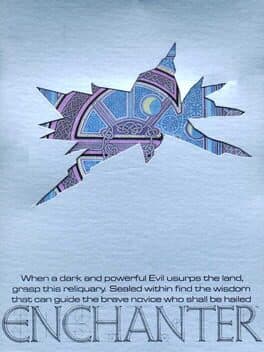
Enchanter
Infocom1983
Enchanter is a bullet hell RPG that blends Metroidvania and roguelike elements. You play as Aria, a fairy exploring the world and the Shattered Space, advancing the story as you go. Your ultimate goal is to reach the deepest part of the Shattered Space — the World Library.

Planetfall
Infocom1983
Planetfall is a science fiction interactive fiction computer game written by Steve Meretzky, and the eighth title published by Infocom in 1983. Like most Infocom games, thanks to the portable Z-machine, it was released for several platforms simultaneously. The original release included versions for the PC (both as a booter and for DOS) and Apple II. The Atari ST and Commodore 64 versions were released in 1985. A version for CP/M was also released. Although Planetfall was Meretzky's first title, it proved one of his most popular works and a best-seller for Infocom; it was one of five top-selling titles to be re-released in Solid Gold versions including in-game hints. Planetfall utilizes the Z-machine originally developed for the Zork franchise and was added as a bonus to the "Zork Anthology". The word planetfall is a portmanteau of planet and landfall, and occasionally used in science fiction to that effect. The book Planetfall written by Arthur Byron Cover, uses the game image on the cover, and is marketed "In the bestselling tradition of THE HITCHHIKER'S GUIDE TO THE GALAXY.[2] A sequel, Stationfall, was released in 1987. Planetfall teleports you 12,000 years into an outrageous future. You joined the Stellar Patrol to explore the galaxy, but all you've seen is the end of a mop - until your ship explodes and you're jettisoned onto a mysterious, deserted planet. Luckily, you have Floyd, a lovable multi-purpose robot with the personality of a mischievous 8-year-old. He's the ideal companion with whom to brave your new world, as you dare its dangers and uncover its secrets.
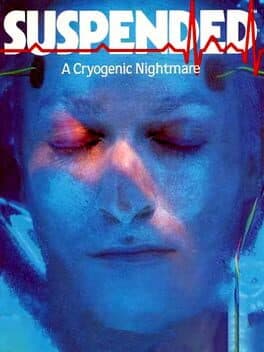
Suspended
Infocom1983
You must save the planet above by repairing the Complex you are frozen within. You must do it before they arrive to shut you down. And you must do it not with your own hands, but with those of your robots.
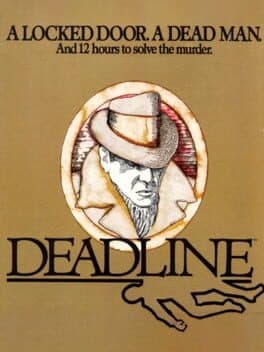
Deadline
Infocom1982
Step into the future with Deadline, a VR corridor shooter that pits you against relentless robotic enemies. Arm yourself with a variety of weapons, master lethal combos, and navigate through challenging levels. Can you survive the robotic onslaught and unlock the secrets of the future?
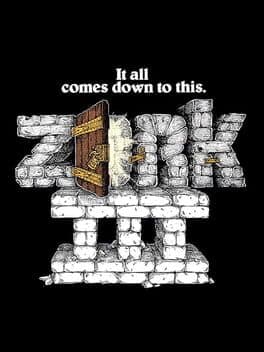
Zork III: The Dungeon Master
Infocom1982
In the third game of the adventure game series Zork, you are once again a nameless adventurer, only this time you won't travel through a beautiful magical land, but are immediately cast into a deep dungeon. Like in a dream, you hear a mysterious voice telling you that you have passed all the tests but one. When conscience returns to you, you find yourself on the endless spiral of stairs, with only your trusty lantern near you... will you be able to survive the horrors of the Dungeon?
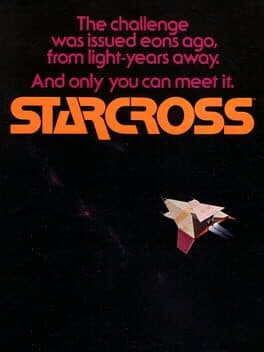
Starcross
Infocom1982
The year is 2186. Humanity has established colonies on the moon, Mars, and several of the larger asteroids. Earth's sky is dotted with space habitats, and the spaceways are always busy. As usual, there is the urgent need for energy to power this advanced civilization; one of the primary sources of that energy is quantum black holes. In Starcross, you are a miner of black holes, scouring the asteroid belt in your one-man survey ship. Finding and harnessing a single black hole can make a person's fortune. It's a lonely business, fraught with the known and unknown hazards of space. You've equipped your ship, the M.C.S. STARCROSS, with the best gear you could afford. You've put everything into this venture, and though you've tried before, you somehow sense that this time will be different.
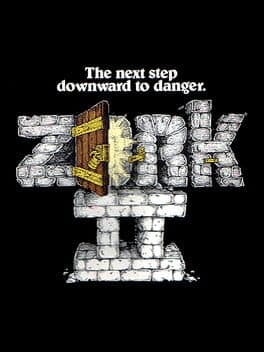
Zork II: The Wizard of Frobozz
Infocom1981
The adventure begins in the Barrow from "Zork I" armed only with the trusty brass lantern and sword of elvish antiquity. The purpose of the game is not initially clear. Like its predecessor, Zork II is essentially a treasure hunt. Unlike the previous game, the ten treasures are tied together by a crude plot. Finding the treasures does not end the game, nor are all the treasures needed to finish the game. Instead, the adventurer must figure out a way to use the treasures in order to reach the game's finale.
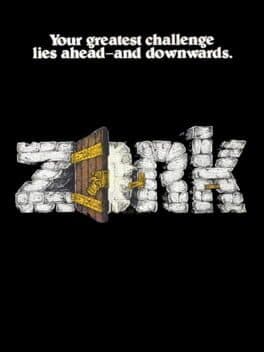
Zork
Infocom1977
Zork is one of the earliest interactive fiction computer games, with roots drawn from the original genre game, Colossal Cave Adventure. The first version of Zork was written in 1977–1979 using the MDL programming language on a DEC PDP-10 computer.